

Not long after the March 2026 broad core update completed, we had another core update to deal with. And this one was much more powerful than the March update… The May 2026 broad core update started rolling out on May 21, 2026 and it caused a ton of volatility across verticals and countries. It took eleven days to fully roll out completing on June 2, 2026.
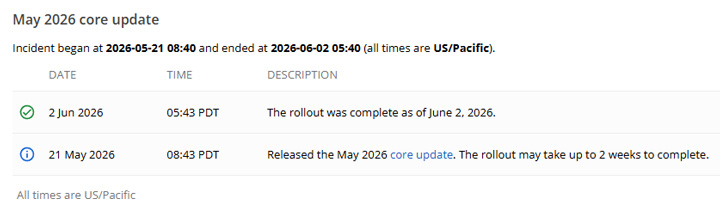
The update landed quickly and I started seeing impact about 48 hours into the rollout. You can often see that with broad core updates, but we didn’t see that in March. I shared on X via my “Core Update Notes” that I began seeing the update land on May 23rd, just two days after the rollout began.
I also commented on X, and elsewhere, that the March update was meh while the May update was BIG. For whatever reason, the March update just didn’t have the power of the May update (or some previous core updates like the December core update).
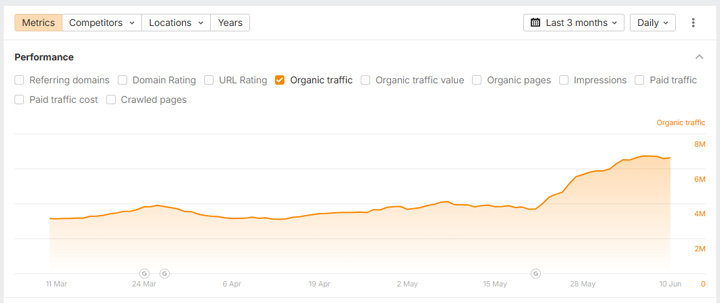
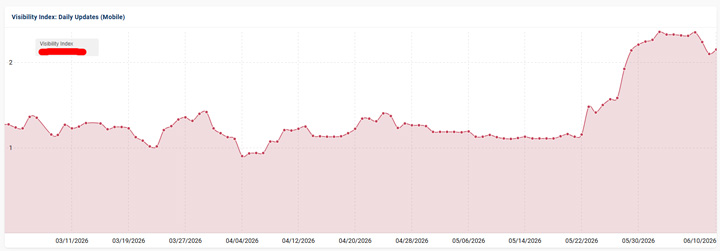
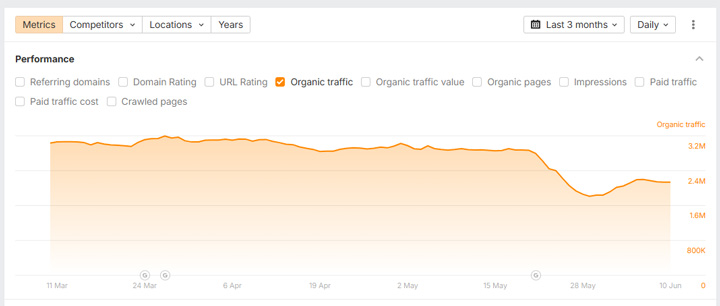
(Back to) some huge surges and drops… like you see with many core updates:
Just to give you a feel for how powerful the May update was, here are some screenshots from across sites and countries. Google wasn’t messing around.
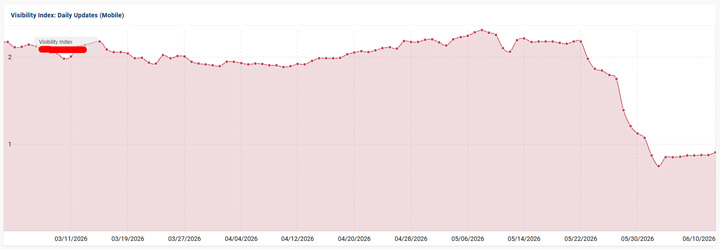
YMYL seeing early and powerful impact (again), especially gambling:
I have shared in the past how YMYL categories can see a ton of volatility during broad core updates. Well, the May core update was no different. I started seeing a lot of movement in health and finance early in the update. And then there was massive volatility with sites focused on gambling, which is an ultra-YMYL category.
It’s important to understand that YMYL content is held to a higher standard algorithmically. Playing in these categories is not for the faint of heart, pun intended. As Kenny Rogers once said, “You’ve got to know when to hold ‘em”…
Here is movement across some sites focused on gambling (including casinos and sports betting):
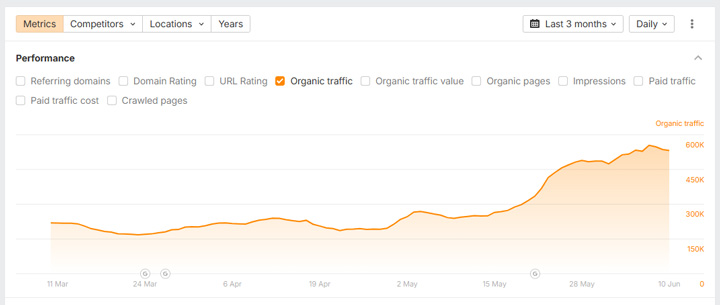
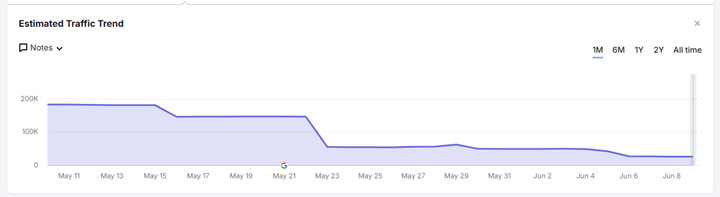
Two powerful tremors during the May 2026 Core Update:
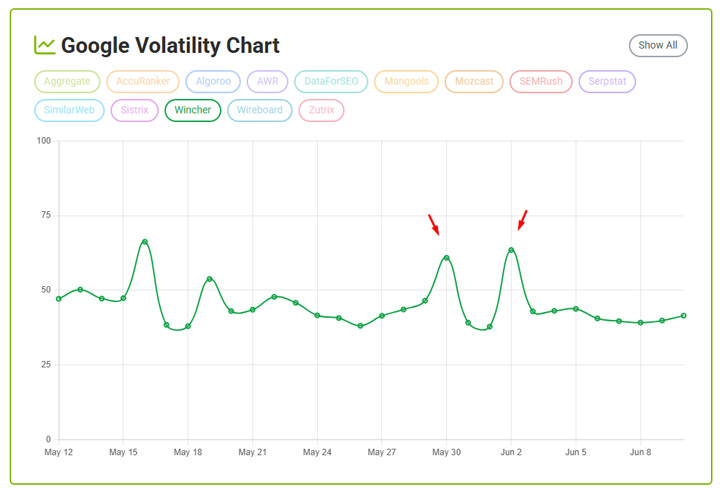
During a broad core update rollout, you can often see what I call “tremors”, which are specific dates of heated volatility. This is when Google can update additional systems during the rollout, or they can tweak things based on what they are seeing during the rollout.
I believe the tremors we saw with the May core update were additional systems being updated, since there were specific types of sites seeing a lot of impact during those tremors.
Barry covered both tremors on Search Engine Roundtable when the tools and chatter spiked. Barry’s new algorithm volatility aggregator shows the tremors pretty clearly for several of the tools (and in aggregate):
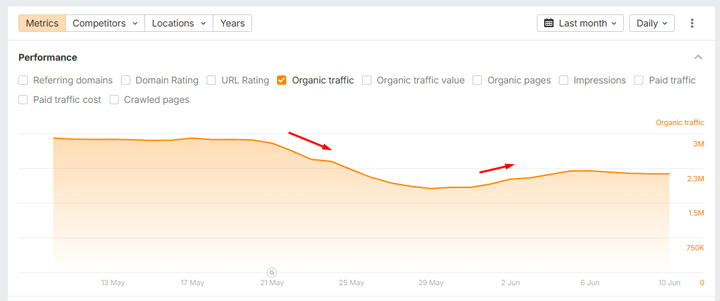
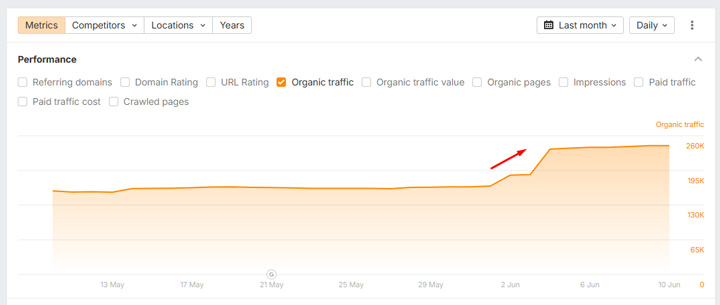
For example, the sites below saw a lot of impact late in the rollout during the final tremor (around June 2nd). That was the final day of the rollout by the way. That final tremor caused a big change in rankings for some sites, including volatility in Google Discover. I had several sites owners reach out that they dropped out of Discover with that final tremor. So, just be aware that can happen and that tremors can have a ton of impact.
And check this one out… It surges like crazy with the final tremor:
Did sites gaming AI Search get hit?
I have shared about sites using risky SEO tactics to game AI Search many times across social media. Every sign points to Google cracking down heavily on that, and possibly soon. There is a huge risk for site owners using risky tactics to game AI Search since if you get hammered by Google for doing that, your site will drop out of the 10-blue links, AI Overviews, AI Mode, and Gemini. And as several of us have demonstrated over the past year, if you drop in Google, you can drop heavily in AI Search platforms like ChatGPT, Perplexity, etc. That’s since ChatGPT and others can ground their responses via Google Search. So if you drop there, you can drop downstream in AI Search platforms.
On that note, Google recently published a document about optimizing for AI Search and provided a great mythbusting section that included some of those risky tactics. In addition, Google just updated its “Do you need an SEO?” document with information about AI Search, AI Search tools, and more. And finally, it created a new document covering guidance on using third-party SEO tools where it covers AI Search.
These are warnings in case you didn’t realize it. I don’t want to bog down this post, but I highly recommend reading those documents thoroughly. And if you are gaming AI Search via risky tactics, just understand that Google could issue manual actions or it could roll out spam updates tackling those issues. Beware.
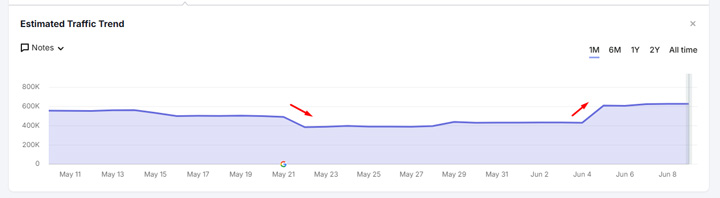
I checked the visibility across the list of sites I have documented that are gaming AI Search and I saw mixed results. Some are dropping, some are stable, and a few actually increased with the update. So, I don’t think Google did anything specific with this update to tackle the problem. That doesn’t mean site owners should go and spam Google to rank in AI Search… It just means that whatever Google is going to do to tackle the problem hasn’t rolled out yet. I believe that will be a mixture of manual actions and then a spam update (or several). Stay tuned.
Here are some sites gaming AI Search and how they fared with the core update:
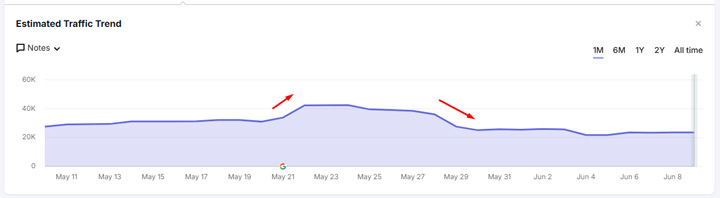
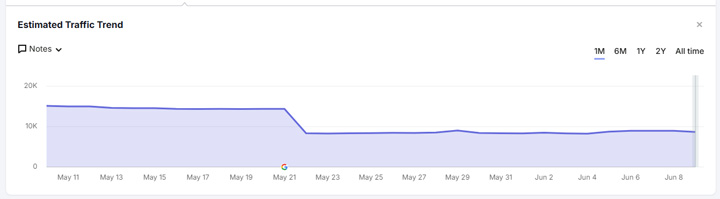
And here is one that was negatively impacted by the March core update that contains a number of articles that clearly were published for AI Search. The update impacted the site pretty heavily as rankings dropped for many queries. Again, it works until it doesn’t…
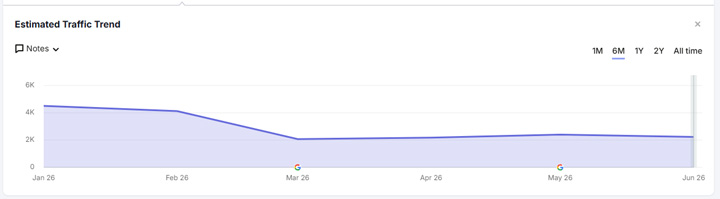
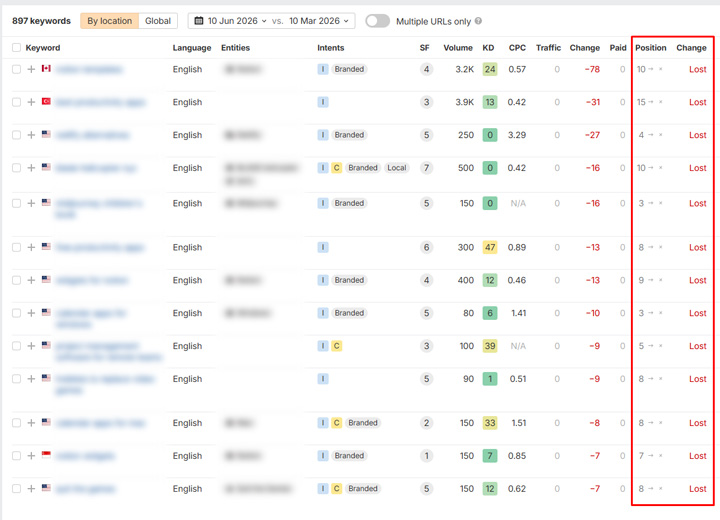
Tracking sites impacted by the January 2026 unconfirmed update:
Google rolled out a big, unconfirmed update in January 2026 that heavily impacted sites with “commodity content”. And that included sites heavily using self-serving listicles. You can read Lily Ray’s post about the update, but just understand that some of those sites got hammered in January. They lost a ton of search visibility then, which includes drops in AI Overviews, AI Mode, Gemini, and then downstream in ChatGPT.
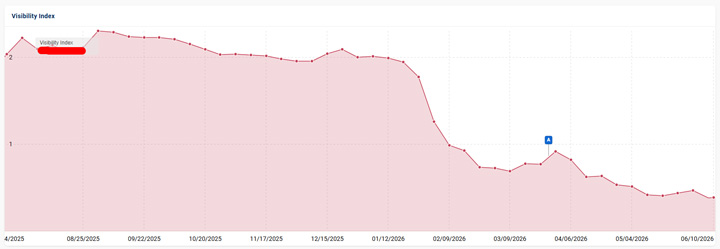
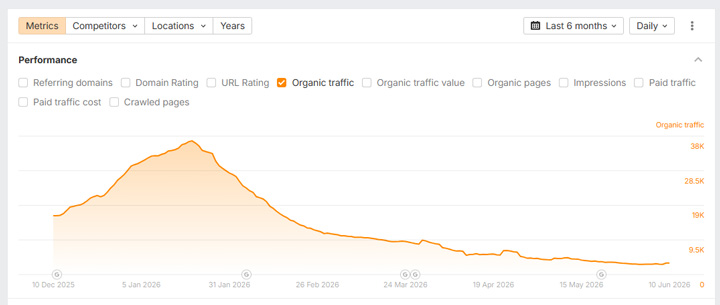
With the May core update, I wanted to see if any of those sites recovered at all. Based on checking many that dropped in January, I’m not seeing any recover yet. It’s just another example of why you don’t want to be on the wrong side of an algorithm update based on gaming Search, AI Search, etc. Actually, some are down even more with the May core update.
Here are some examples of those sites over time:
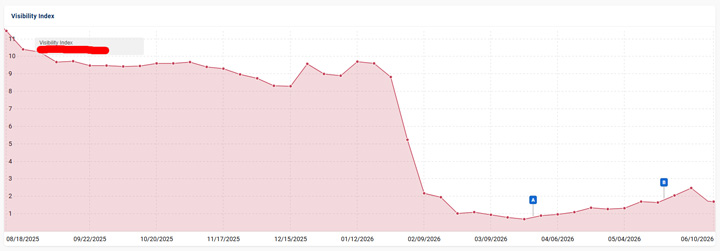
And a “Mt. AI” sighting.
Interesting Case – Manual action first, then a core update to finish the job
There is a site that received a manual action earlier in the year based on gaming Search via a specific tactic (news-wise) and the site was deindexed completely when that happened. They were receiving a ton of traffic based on ranking in top stories, Google News, Discover, etc.
They did get the manual action removed after changing their tactics and implementing changes, but that manual action was just air cover. When the May core update rolled out, they got hit hard algorithmically. It was a super interesting example since Google clearly did something on its end evaluation-wise that caused the site (and others like it I’m sure) to tank with the core update.
Also, it’s another example of why you don’t want to push the envelope with Google’s guidelines. Again, I think we will see Google address sites and tools gaming AI Search soon. So this could happen to them. Stay tuned.
Here is the initial drop with the manual action (and partial recovery after the manual action was removed):
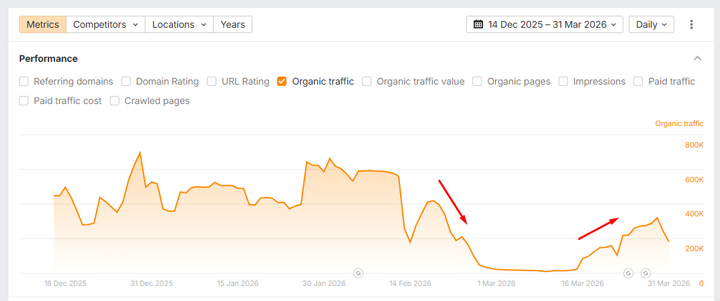
And here is the impact from the May core update from a Top Stories standpoint. The site overall was impacted negatively but you can see the biggest impact with news features like Top Stories:
Grokipedia Rises (again). But for how long?
In January I coined the phrase “Mt. AI” as I saw sites scaling heavily with lower-quality AI-generated content that kept yielding the same trending over time. They would surge initially and the site owners believed their strategy was working… only for that to come crashing down after Google hammered the site either via a manual action or algorithmically. It looks like this:
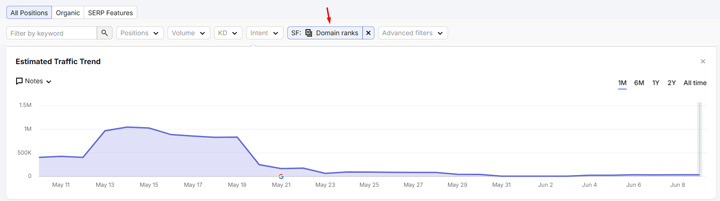
Well, there’s not a higher profile site on the web publishing 100% AI-generated content than Grokipedia.com. And it also initially surged like crazy, only to come crashing down in February of 2026. I covered that across social media. Also note, the site dropped across AI Search like ChatGPT, in addition to traditional search. That’s important to understand and I have covered that many times as well. Drop in Google and you can drop across AI Search (since AI search can be grounding its answers via Google’s index):
But hold on… Grokipedia actually surged with the May 2026 core update. I was surprised to see that happen, but I don’t think it’s a long-term win for them. I fully expect it to drop once again algorithmically. I’ll keep an eye on the situation and post an update if things change (which again, I believe will happen).
Here is trending for Grokipedia with the May 2026 core update and then trending over time (showing the initial surge and then big drop in February):
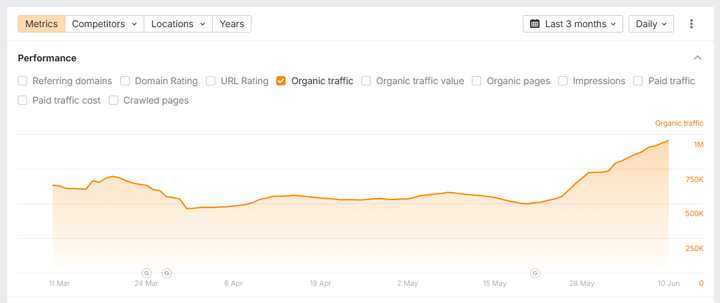
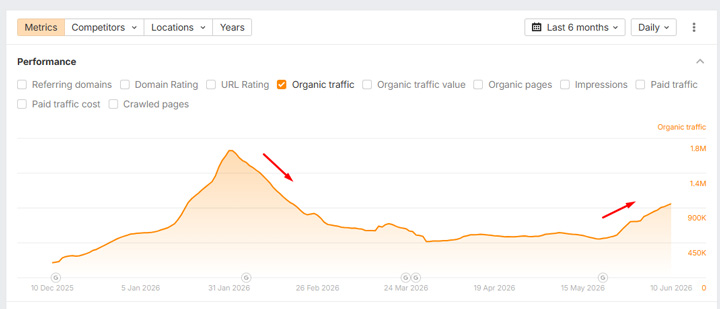
And like I explained earlier, impact in organic search can impact AI Search. Malte Landwehr from Peec AI shared that he’s seeing Grokipedia also surge in ChatGPT citations after surging in Google with the May core update. Again, that can happen as ChatGPT grounds its answers via Google Search.
Scaled content abuse (with translations):
I have covered the risk of scaling lower-quality or thin content heavily in previous posts, especially for sites trying to game AI Search. Remember “Mt. AI” from earlier? Well, there was a great example of this with the May core update.
The site scaled a ton of lower-quality content, and then pushed the limits based on scaling AI translations for a number of languages. I covered the danger of translating content via AI with multiple posts about Reddit’s AI translations. Reddit scaled tens of millions of urls across countries and it’s working extremely well for them… And it’s not just about AI, it’s about scaling lower-quality content in any way (programmatic included).
When I first covered the situation, Google explained that as long as the content is high quality, then scaling translations via AI is fine to do. But there’s the rub… not every site owner can accurately determine if content is high quality. So if you scale low-quality content via AI translations, that can be “Scaled content abuse”. It’s a tricky situation, and one that can end very badly.
Well, the site I’m covering in this post definitely scaled lower-quality content and then translated it into multiple languages. And the May core update rolled out and the site got hit hard. Just a warning for anyone thinking about scaling via AI or via AI translations. Beware.
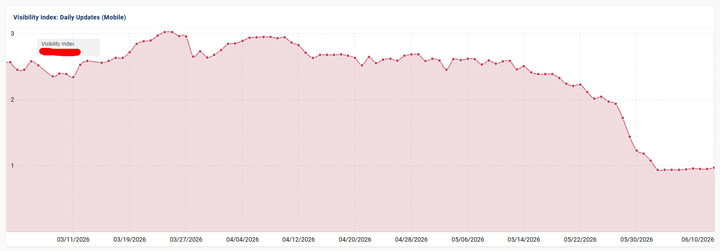
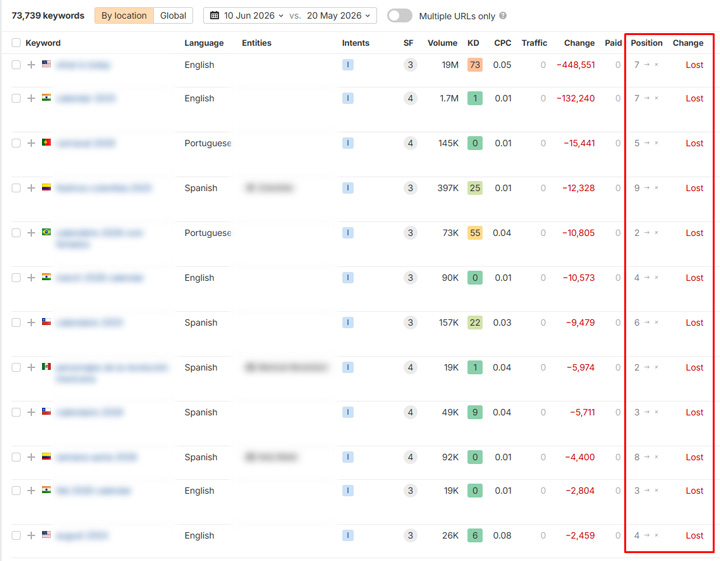
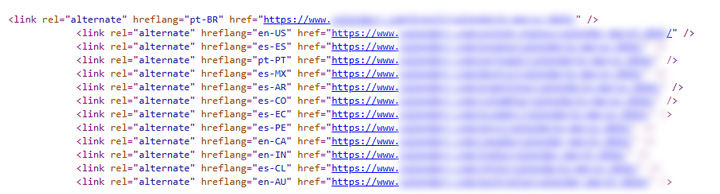
As you can see below, the site scaled lower-quality content across several language/country combinations:
Summary – Core roars back with power in May.
The May 2026 core update roared back after a lackluster March core update. It was powerful and impacted many sites and verticals across countries. We saw a quick landing, heavy impact, huge surges and drops, two tremors, and more. It’s what I expect with a broad core update.
I hope you found these cases interesting. I thought they represented how powerful and interesting core updates can be… And moving forward, I do believe we will see Google address sites trying to game AI Search soon… All signs point to a mix of manual actions and spam updates. Stay tuned, the summer is just heating up.
GG