

Google rolled out yet another spam update on August 18, 2026 after rolling one out in late June. As a reminder, Google can roll out specific spam updates when it determines sites using spammy tactics are ranking well via its core ranking system. You can think of spam updates as “patches” to handle spam that’s slipping through the cracks. And with many companies using risky tactics now to game visibility in AI Search like ChatGPT, AI Overviews, and more, there is no shortage of spam on the web.
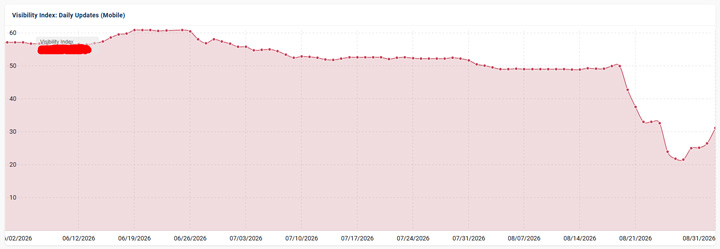
Spam updates typically don’t take long to roll out, and the August 2026 update was no different. The update took just slightly over two days to fully roll out. Google announced the update completed at 4:51AM ET on August 21, 2026. But don’t be fooled by the short rollout. The spam update was fierce for those impacted, and there were some huge drops based on the update.
Since the rollout completed on August 21, I’ve surfaced a number of sites that dropped heavily and I’ve also had a number of companies reach out about getting hit. So between my research and confirmed spam update hits, I’ve been going through the damage to see what Google targeted with this spam update.
It’s also important to note that when a site is impacted, it can drop across surfaces, including AI Overviews and AI Mode. So yes, AI Search is impacted. And when ChatGPT grounds its answers via Google (which can happen), then sites can drop there as well.
Below, I’ll cover four blinded cases. Note, my goal is not to out any company impacted. Instead, I want to share what I’m seeing spam-wise so companies can address the situation and recover. And yes, sites can recover from spam updates. I’ll cover more about that soon.
First Stop, Google’s Spam Policies:
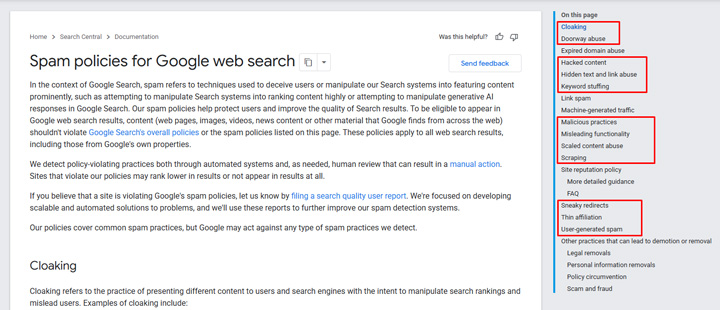
Like I have done with previous posts about spam updates, it’s important to review Google’s spam policies to see where your site might be violating a specific policy (or several). Note, link spam updates are separate, so the August 206 spam update was not targeting link spam. Based on that, I would take a hard look at Google’s policies that address content. For example, I would review the policies for ‘scaled content abuse’, ‘thin affiliation’, ‘doorway abuse’, ‘scraping’, ‘user-generated spam’, and other policies related to content.
And if you have been following me on X or LinkedIn, then you know how I feel about scaling AI-generated content… Heck, I coined the phrase, “Mt. AI”. Needless to say, I would be very careful when scaling AI-generated content or employing programmatic content. I’ll cover more about those situations below.
Recovery From Spam Updates: Yes, It’s Possible.
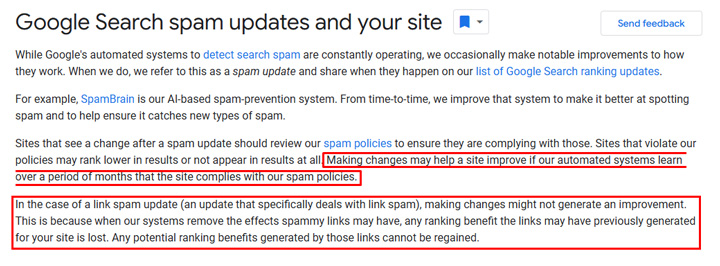
As I have shared many times before, you can recover from previous spam updates over time. That’s if you address the spam on your site, stop spamming moving forward, and Google sees that over an extended period of time (usually months). I have shared about spam update recoveries across social media before. So yes, that can happen.
With the introduction out of the way, let’s jump into the case studies.
Case One: Programmatic AND AI-Generated Content in an Ultra-YMYL Niche
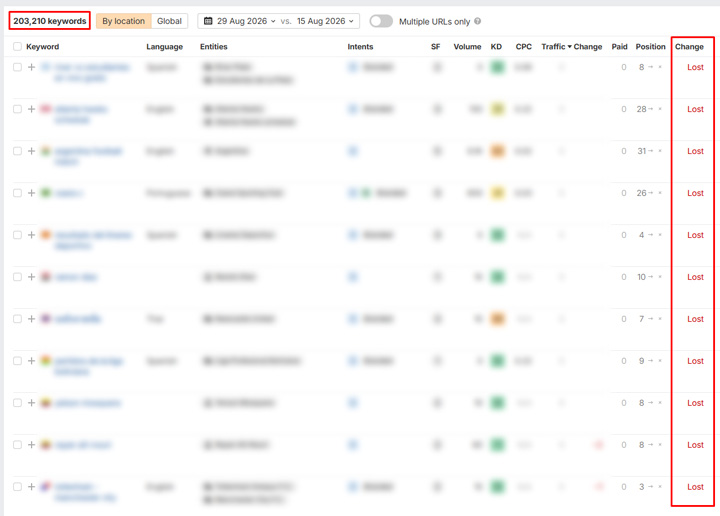
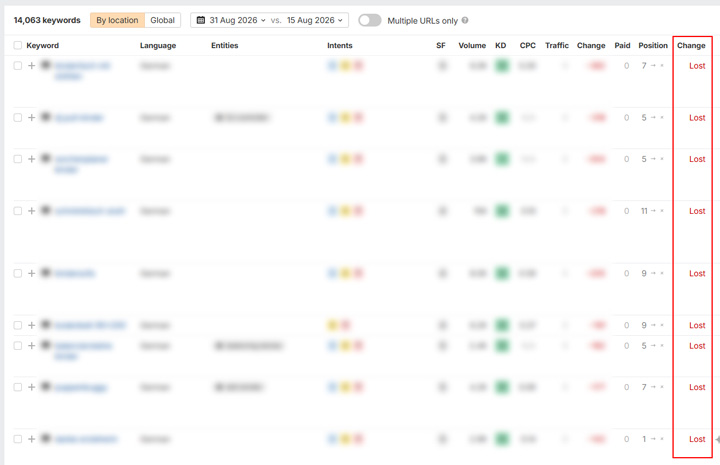
The first site is in an ultra-YMYL niche and got hammered by the spam update. The site lost rankings for over 200K queries based on the update (not just declined in ranking, but completely lost). When digging into the drops, you can see massive scaling via programmatic content, and across countries.
But it doesn’t stop there. I’m seeing chunks of AI-generated content within those pages. Imagine pages that contain a ton of programmatic content and the only other content is 100% AI-generated. So this is a two-headed monster based on both programmatic and AI-generated content. And to reiterate, this is an ultra-YMYL niche. Not good.
Case Two: Thin Affiliate (Amazon) AND AI-Generated Content
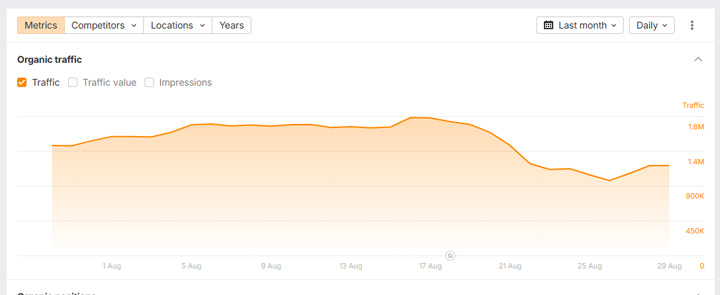
The next site I’m covering took a big hit with the August 2026 spam update. And when digging into the drop, it was easy to see what the problem was. And this is something I’ve had site owners reach out to me about for a long time. For example, I saw this a lot during medieval Panda days (circa 2011-2014).
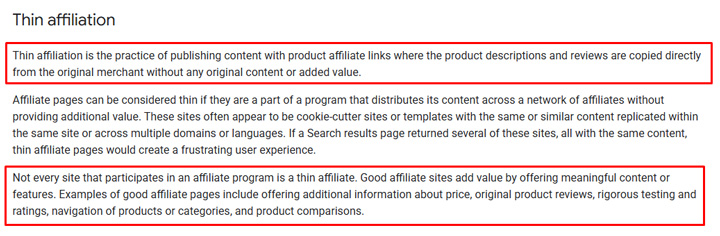
The entire site was a giant Amazon affiliate setup, but it was completely programmatically-driven (turn-key). So the site was programmatically crafting categories and product pages based on Amazon data and then simply linking to Amazon with affiliate links. Heck, for a number of categories, there weren’t even product images for some reason. It was a large list of product links without any visuals. Google lists this situation in its spam policies as “Thin Affiliation“.
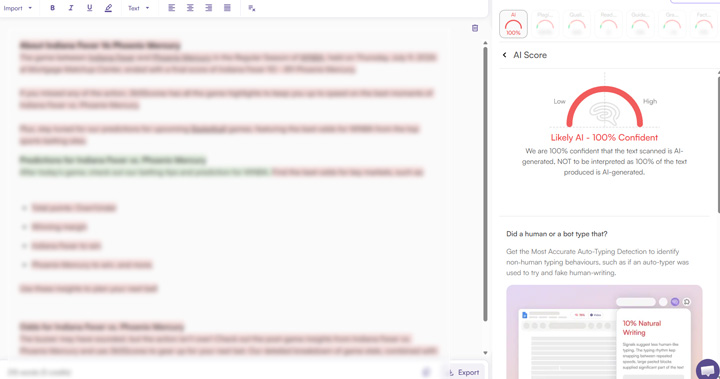
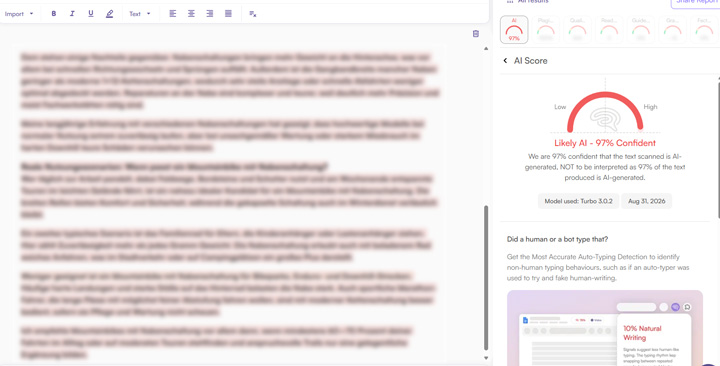
In addition, there was a lot of content stuffed at the bottom under the category listings or products, and that was coming back as 100% probability of AI content. So again, there’s a combination of programmatic and AI content.
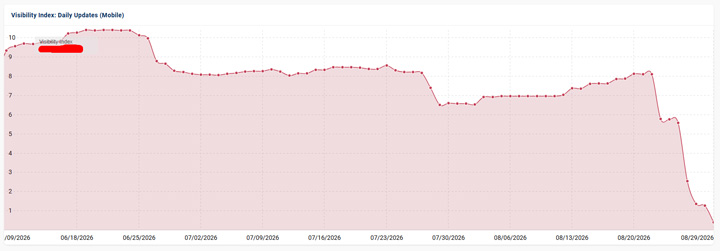
If anyone can set up a site programmatically like this with almost no human involvement at all, what value is there? i.e. All of the content is scraped from Amazon at scale and anyone can set this up. Again, I’ve seen many sites like this get hammered over time. The site lost over 14K queries based on the spam update. Again, not just dropped in rank, but lost completley.
Here is what Google considers “Thin Affiliation”:
For the large amounts of text added to the bottom of pages, it was coming back as a very high probability of AI-generated content (typically 97%+).
Regarding recovery, this is one of the cases where recovery could be very tough. Unless the site owner completely changes how the site is set up, works, etc., then I’m not sure they can recover.
Case Three: Scaled Content Abuse, Programmatic Content, Yet Has A Human Element
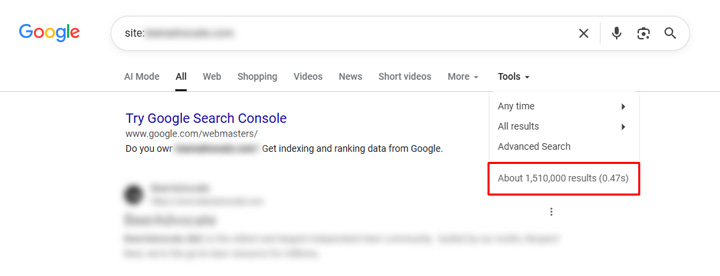
The next case I’ll cover is an interesting one. The site has over 1.5M urls indexed and it definitely falls under ‘scaled content abuse’ to me. But beyond that, the UX is terrible, there are tons of aggressive ads, and it’s hard to traverse the site in my opinion. It’s heavily programmatic, but does have a human element to it. The site provides content about specific products, so it’s trying to match up a search for that product with a programmatic page containing information.
For many of the pages, there simply is no value-add. It’s just a photo and some information that you can find anywhere across the web. But again, there are multiple sections to the site and there is a human element there (UGC that does look legitimate).
That said, most of the content resides in the programmatic part of the site (about 85% of the indexed pages are there). So from a “quality indexing” standpoint, that’s an important stat. There’s also a long history with the site and I can see where the issues came in… I won’t go into a lot of detail about that, but I can see how and when the site went off the rails.
Also, the spam update yielded impact across sections (site-level). It’s another reason you don’t want to be impacted by a spam update. The entire domain can be impacted, similar to a broad core update. Beware.
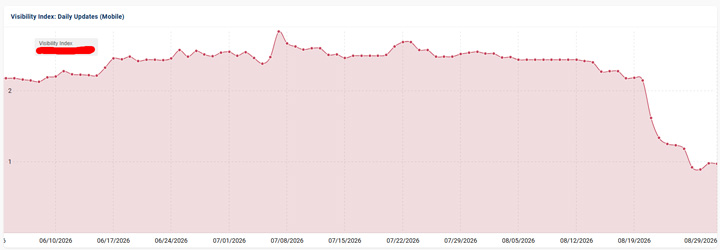
There is also quite a bit of negative sentiment across the web about the site. This seems to be from the changes over time I mentioned earlier.
Case Four: Scaled Content Abuse and Misleading Functionality On A Super Aggressive Site
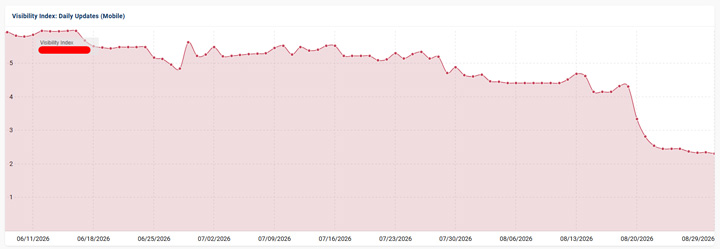
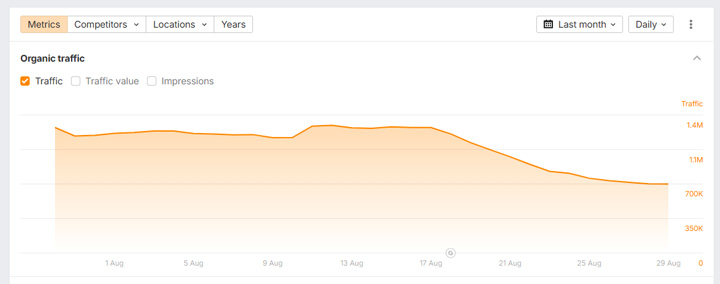
This is the most egregious example I have seen based on the August spam update. The site scaled to over 250K urls, it’s in a risky niche (to say the least), and then the site redirects users to other risky sites when users take action. So this site could be violating multiple spam policies that caused the big drop in visibility.
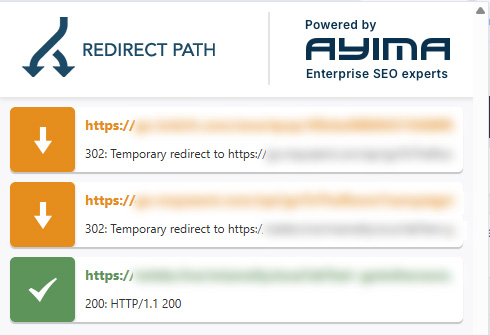
For example, the site’s content scaled to include a ton of pages covering queries that some people are (unfortunately) looking for. Many of the pages don’t include what users really searched for (thankfully), but if any of the core links are clicked on the page, users are redirected to another site, which is even more aggressive and riskier than the original site. Sounds great, right?
To be honest, I’m surprised the site hasn’t been deindexed at this point, but at least the spam update massively reduced its visibility. Query-wise, the site dropped in rankings or completely lost rankings for close to 25K queries (a significant portion of total queries it was once ranking for).
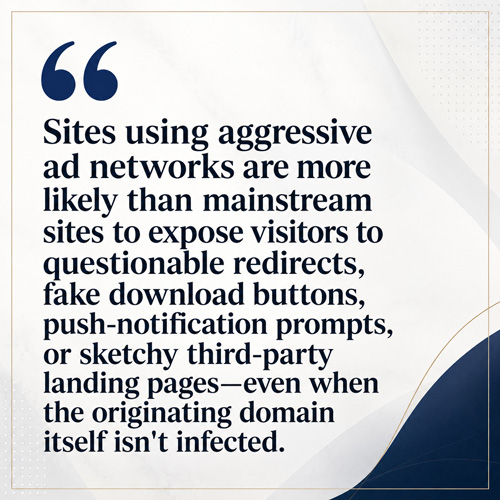
And digging deeper with AI to review the reputation of the site, if users have reported it, if any malicious activity has gone on there, I found some very interesting things from the past. You can see a quote from the research based on the ad networks the site is running, which speaks volumes.
Recommendations for site owners impacted:
For site owners impacted by Google’s August spam update (or any spam update), it’s important to take the necessary steps to clean up the site and then drive forward. If you don’t make changes, there is a really good chance the site does not recover at all. Here are some tips for site owners that dropped due to the spam update:
- Address the spam aggressively. Review Google’s spam policies, identify where your site might be violating those policies, and clean up the spam.
- Stop spamming and don’t implement anything like that moving forward. Google will need to see a clean site over an extended period of time in order for you to recover.
- Once the site is clean, keep driving forward with the right strategy. Don’t just let the website sit without driving forward. Publish great content, provide a great user experience, earn mentions and links over time, and don’t fall back to old ways.
- Recovery-wise, Google has explained that it can take months after making significant changes before a site can recover from a spam update. And that’s exactly what I have seen in the field. Sites can recover from spam updates, but it just takes a lot of work to clean up the site and then drive forward. I have covered spam update recoveries a number of times in the past. You can see a recent tweet below where I shared a great example from Lily Ray.
Summary: Google’s August 2026 spam update was fierce for those impacted.
I hope the four case studies I covered helped you understand more about what Google is targeting with spam updates. Again, there are many companies using risky tactics now to game AI search visibility, so ‘Scaled content abuse’ (especially via AI-generated content) has surged recently. But it’s not just that… I covered programmatic content, thin affiliate content, and malicious activity as well.
So, if you have been impacted by the August spam update, then follow the tips I provided in this post and address the spam. Then drive forward with the right strategy over time. That’s the path forward. Good luck.
GG