
I cover the December 2025 broad core update, which was a huge Google algorithm update that rolled out right in the middle of the holiday season. My post covers heavy YMYL impact, AI Overviews and AI Mode visibility changes, a big tremor on 12/20, the power and importance of Navboost, news publisher impact, forums impact, and more.

There’s nothing like the holidays. Christmas lights, holiday songs, a roaring fire, and a BROAD CORE UPDATE ROLLING OUT. And Google wasn’t messing around this year. The Google 2025 broad core update rolled out on December 11, 2025, and it caused a ton of volatility across sites, verticals, and countries.
It was huge, which isn’t shocking considering we waited for a long time for the update to finally roll out. The last broad core update was in late June and there were many things Google needed to tackle algorithmically since that time. I’ll cover more about some of those things soon.
Google explained the December core update could take up to three weeks to fully roll out, but the update completed after 18 days on December 29, 2025. That’s about right for a broad core update. Two and half weeks is not out of the ordinary.
In addition, we saw one major tremor during the update on December 20th. That’s when Google can either tweak things based on what they are seeing in the SERPs, or when they update additional systems along the way. Both can cause a lot of volatility during the update. I’ll cover more about that soon as well.
And one final note before I jump into my findings… There were several “smaller core updates” in the fall leading up to the December broad core update which caused quite a bit of movement across many sites. Actually, that’s a good topic to start with!
But first, here’s a quick table of contents if you want to jump around the post:
- Smaller core updates in the fall of 2025.
- Heavy YMYL impact: Finance first.
- More YMYL impact: Health and Medical follow Finance.
- Spam Surging? Not what Google intended to happen.
- Self-serving listicles still ranking: Is a new spam policy coming?
- Major news publishers impacted heavily (including Discover).
- AI Overviews impact (and AI Mode).
- Navboost and the importance of happy users.
- Some forums impacted heavily: SERP features play a roll.
- Recovery from Google spam updates.
- Large publisher networks heavily impacted.
- Wirecutter drops (again).
- Reddit AI-Translations keep surging.
- Recommendations and tips for site owners.
Smaller Core Updates Extremely Visible During The Fall of 2025:
The fall of 2025 was extremely volatile from an algorithm update perspective. Although there wasn’t an official broad core update that rolled out, Google can push what they call “smaller core updates”. That’s when they can update a core system, or several, outside of a broad core update.
As Google covers in their documentation, those smaller core updates can still cause a lot of volatility for some sites. The problem is that Google doesn’t announce those smaller core updates, so site owners are left wondering what impacted them. Also, there are times those smaller core updates foreshadow how the next broad core update could impact a site, while for other sites the broad core update could reverse gains or losses. That’s due to the counterbalancing of core systems, which I covered in a previous blog post of mine.
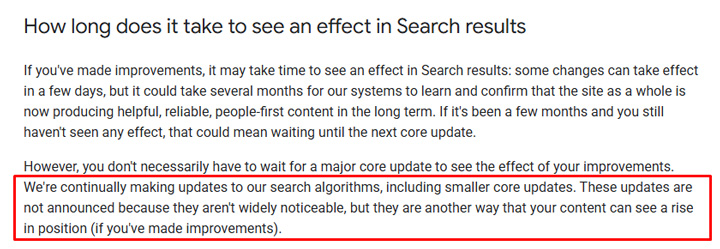
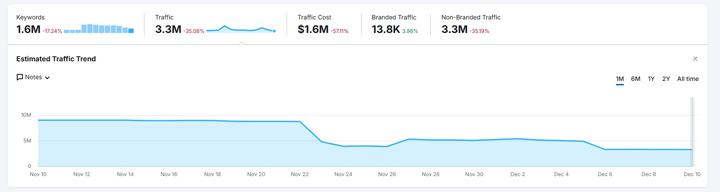
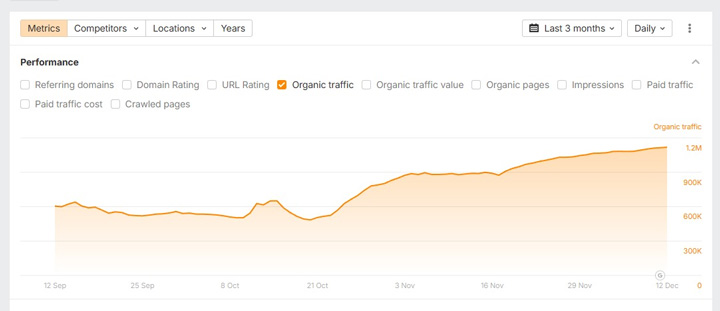
And here are some screenshots of smaller core updates in action:
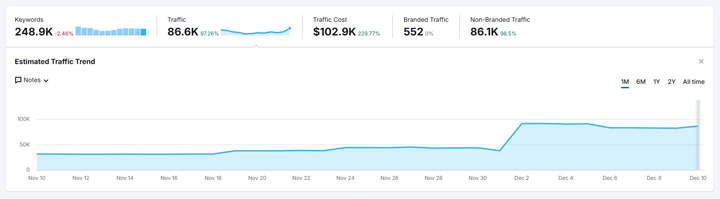
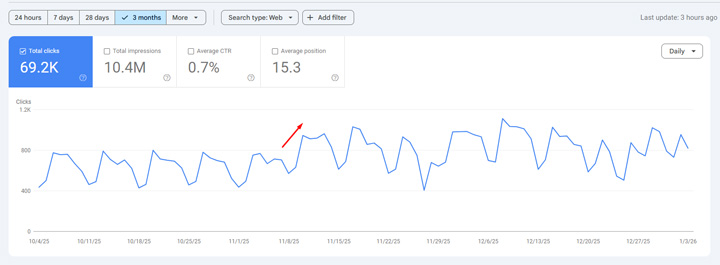
And from a clicks perspective, here is a site impacted positively by one of the smaller core updates in November (which many sites were impacted by):
Heavy YMYL Impact: Finance First.
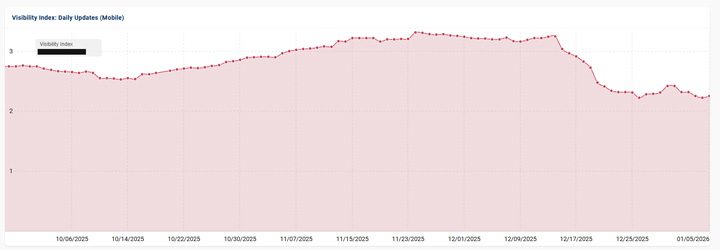
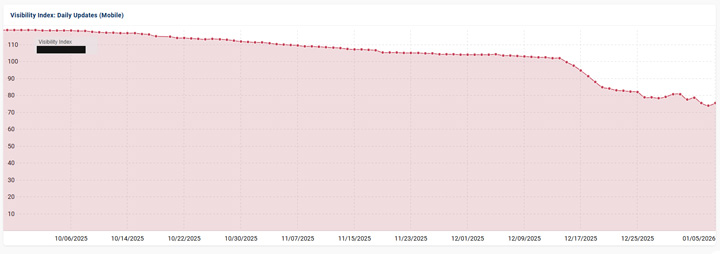
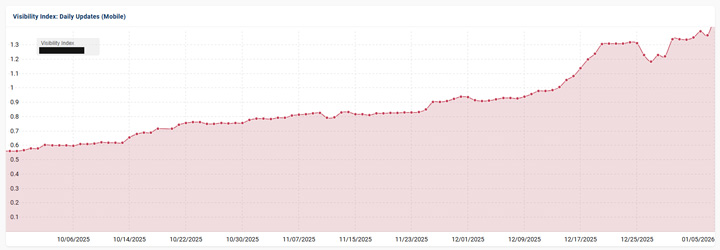
The update officially landed a few days after launching on December 14th. That’s the first sign of major impact that I saw based on reviewing many sites that were previously impacted by major algorithm updates. I run thousands of sites per vertical through visibility checks to see when the update lands. 12/14 was the date in my opinion.
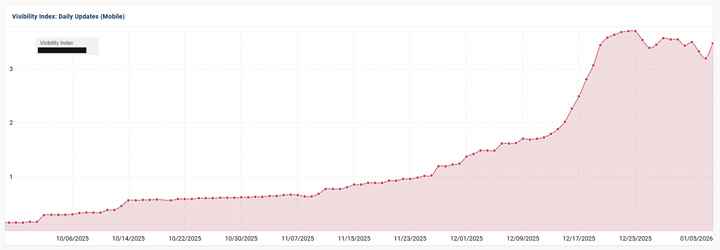
It was clear from the beginning that the December broad core update impacted YMYL sites heavily (and early). I saw massive volatility right away with many sites focused on finance. For example, check out the volatility below for some finance sites heavily impacted by the December broad core update.
More YMYL Impact: Health and Medical Follow Finance.
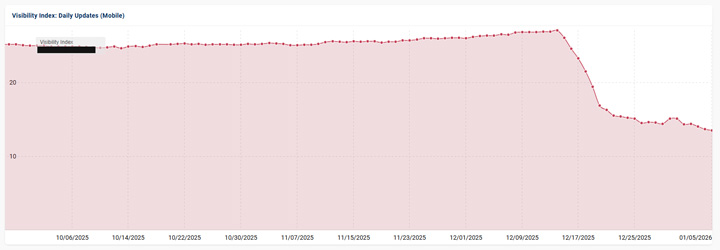
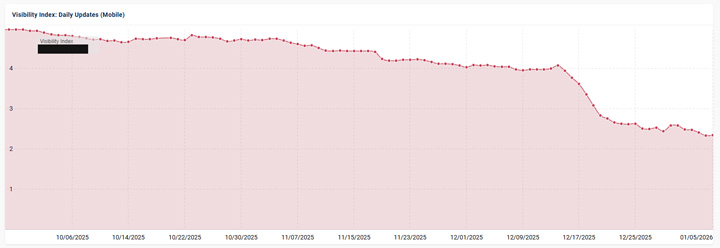
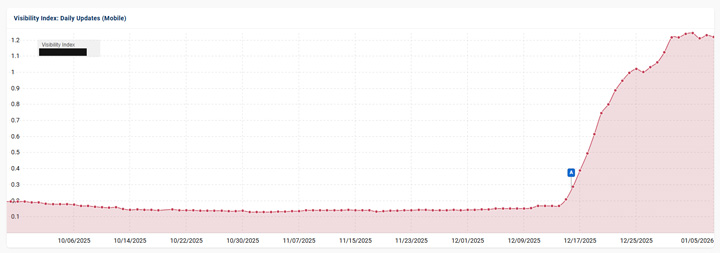
And not far behind finance was the health and medical niche. That vertical also saw massive volatility and across some of the top health and medical sites on the web. I’m not talking about small players here… I’m referring to authoritative health and medical sites dropping heavily with the update. And of course, there were some sites surging like mad as those top positions fell out.
Spam Surges: Not what Google intended to happen…
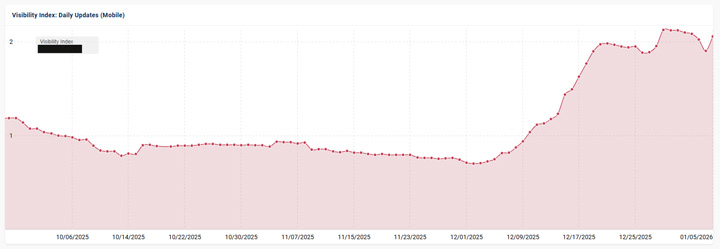
It’s always interesting when a broad core update rolls out and you see spammy sites surging. I was seeing that again when the update first started rolling out. And checking those sites now reveal some of those surges remain. I’m sure they will drop over time, and maybe with “smaller core updates”, but it’s interesting to see this happen with major updates focused on quality.
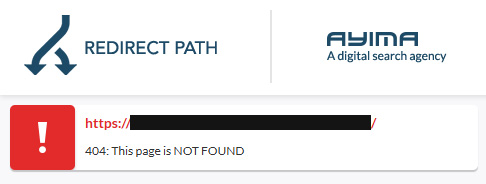
For example, the site below had many pages injected focused on shopping and ecommerce. They still rank now and redirect users to other sites benefiting from those rankings. I see the site is 404ing many of those pages but either Google hasn’t recrawled the pages yet or the site is cloaking. Anyway, they surged like crazy with the December core update. And there are others I picked up as well…
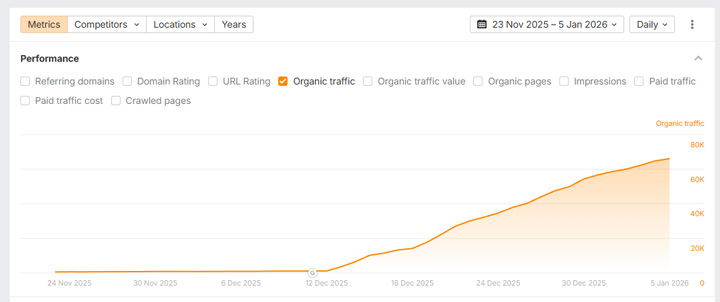
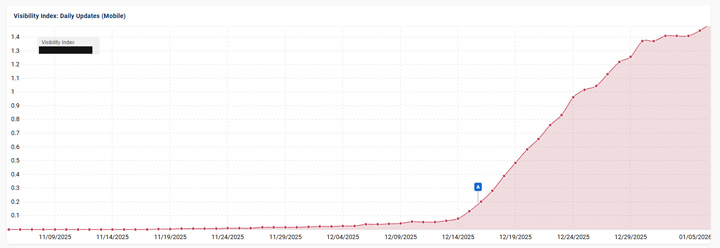
When you visit the urls directly, you see a 404, but when you visit via the search results, you are redirected via JS to another site.
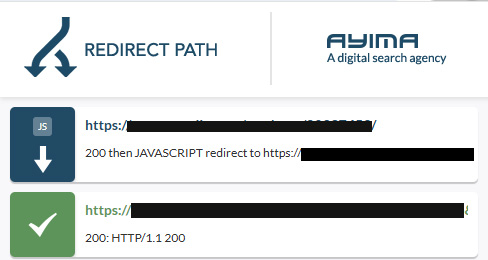
If you see this in your niche, make sure to report those findings via the search results. That should get to Googlers that can pass along the information internally.
Self-Serving Listicles Still Ranking… Is a new spam policy coming with fresh manual actions?
With the rise of AI Search, there are some sites implementing risky tactics to quickly rank across various AI Search platforms like ChatGPT, Perplexity, and more. In a previous post of mine, I covered how the AI Search platforms will need to build stronger core systems and anti-spam systems over time… or they risk losing users as spam and lower-quality content infiltrate AI responses.
Well, one of those tactics is publishing self-serving listicles and placing a company’s own sites at the top of the list… It’s a cheesy tactic, and sort of embarrassing for companies doing that, but it works (at least for now). Glen Allsop covered the situation on the ahrefs blog if you are interested in learning more about it.
I was really hoping that the December broad core update would clean that up, but those listicles seem to remain strong for now rankings-wise. But that doesn’t mean those sites employing that tactic are in the clear… Google could always introduce a new spam policy targeting the approach, or they could algorithmically tackle it down the line. But for now, the self-serving listicle situation is still there in the SERPs.

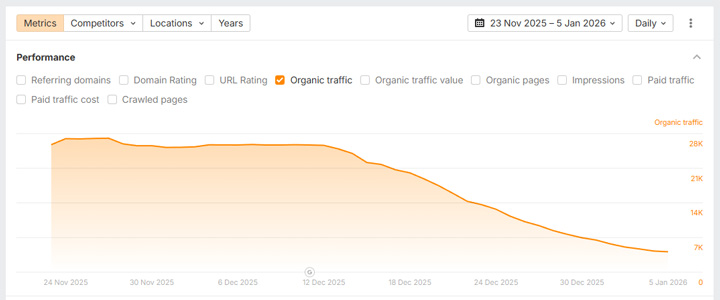
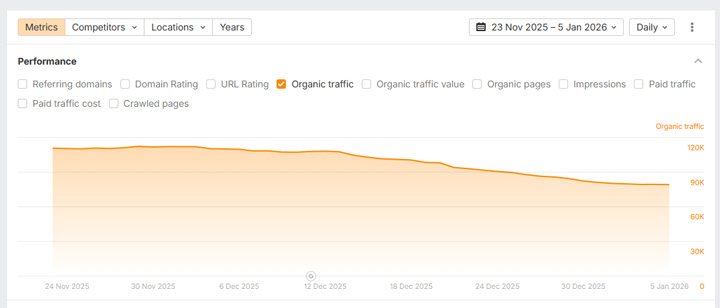
But hold on, that doesn’t mean all of those sites fared well during the update. I noticed a number of them dropping pretty heavily. But that would be based on an overall quality reassessment and not necessarily due to the specific listicle situation (although that content contributes to the reevaluation). Remember, there’s never one smoking gun with a broad core updates. There’s typically a battery of problems for sites that are heavily impacted… Anyway, interesting to see some of those sites drop heavily…
Major news publishers impacted heavily (including Google Discover):
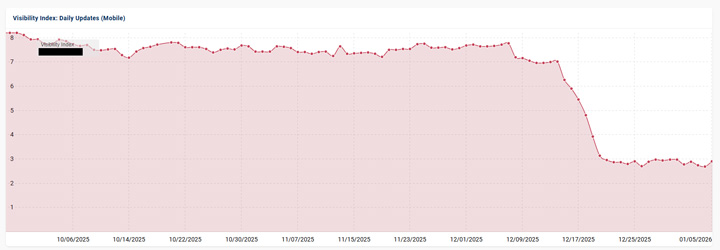
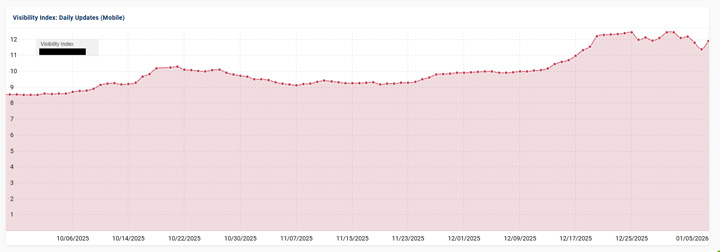
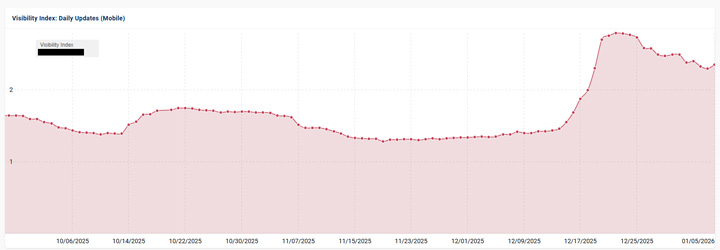
As part of my “Core Update Notes”, I explained how I was seeing major volatility across some of the top news publishers on the web. That was both in the United States and globally. I also had several large publishers reach out after dropping heavily in the SERPs, while also dropping out of Discover. I’ll cover more about Discover shortly…
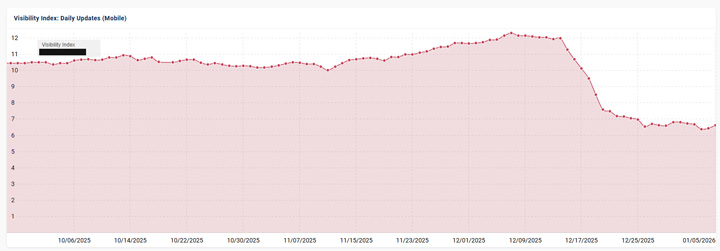
Here is some of the volatility for news publishers based on the December broad core update:
Next, here are some sites outside of the United States dropping heavily that were showing in the US SERPs often. Will Flannigan covered some of this on LinkedIn:
And from a Discover perspective, sites are either surging back into, or dropping out of, Discover based on the overall site quality reevaluation. That’s what we have seen many times before and I have covered that in my posts and presentations about broad core updates. But it was interesting to hear Google explain recently that there was now “minimal overlap with Search ranking” with Discover.
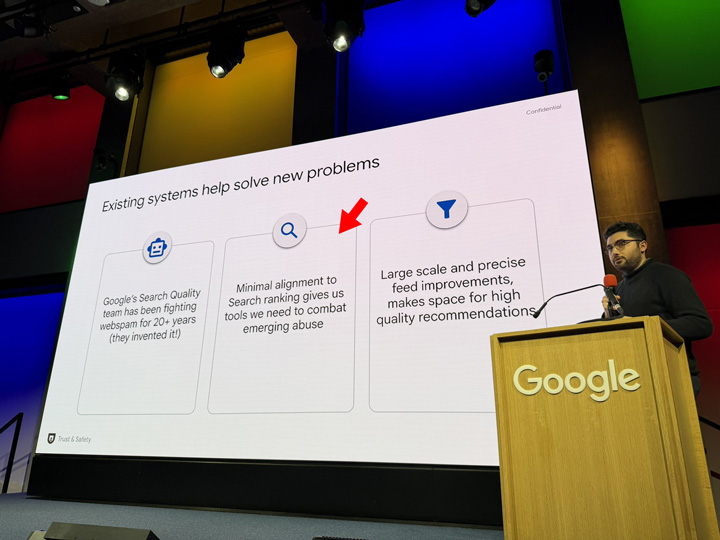
Google explained they wanted to make sure smaller publishers had a chance to be visible in Discover so there is “minimal overlap” with Search ranking. But I’m not sure that’s entirely accurate based on seeing many sites heavily impacted in Discover based on the December broad core update. Again, I’ve covered many times how broad core updates can impact all Google surfaces, including images, news, top stories, Discover, AI Overviews, AI Mode, etc. So this is par for the course in my opinion. But again, interesting to hear Google say something different recently.
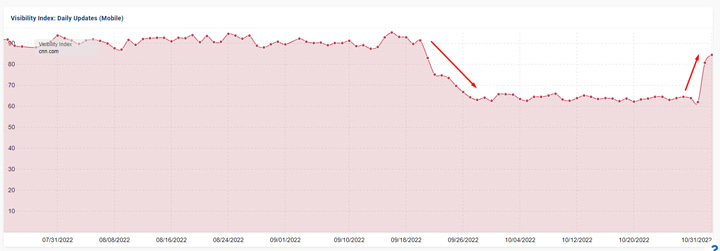
Quick reminder of the September 2022 Broad Core Update and the news publisher correction that rolled out after the update completed:
The news publisher impact I’m seeing with the December 2025 broad core update sort of reminds me of the September 2022 broad core update. Many news publishers tanked during that update, including some of the most authoritative news publishers on the web. But a few weeks after the update completed, a number of those sites surged back with what looked like a correction. Again, Google can always push “smaller core updates” outside of broad core updates. I believe that’s what happened in October 2022 when those sites came roaring back.
I bring this up since it wouldn’t shock me to see something similar with this update (just based on the news publisher volatility I’m seeing and the sites that dropped heavily). Time will tell. Here is my tweet from October 2022 about the recoveries:
And here is an example of what I saw then. CNN had tanked with the September 2022 broad core update but recovered several weeks AFTER the update completed. A number of other prominent news publishers saw the same thing happen.
AI Overviews Impact (and AI Mode):
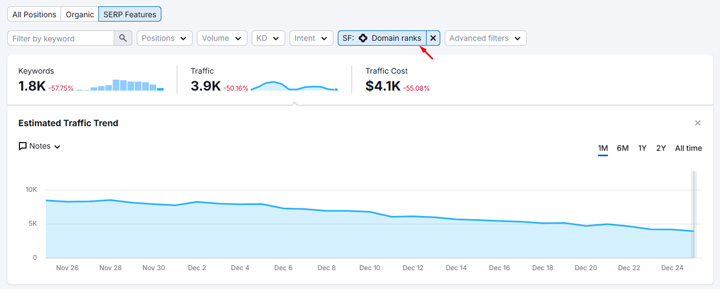
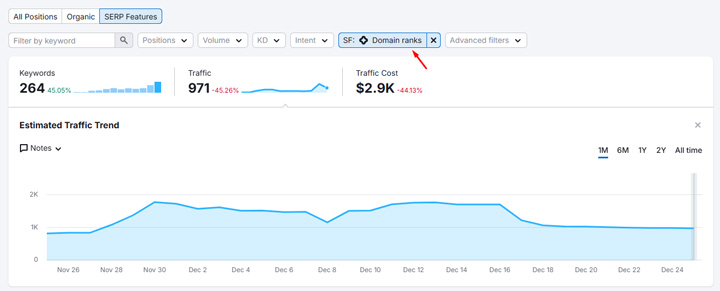
On the topic of Google surfaces, I wanted to quickly cover AI Overviews and AI Mode. I have covered before how both can be impacted by broad core updates since they are rooted in Google’s core quality and ranking systems. So if a site surges or drops in visibility in Search, they can also see impact in AIOs and AI Mode.
I shared in my “Core Update Notes” how sites being impacted by the December 2025 broad core update were seeing heavy impact in AIO visibility. You can see that when isolating AIO rankings in tools like Semrush. See below.
Here is my tweet covering that topic:
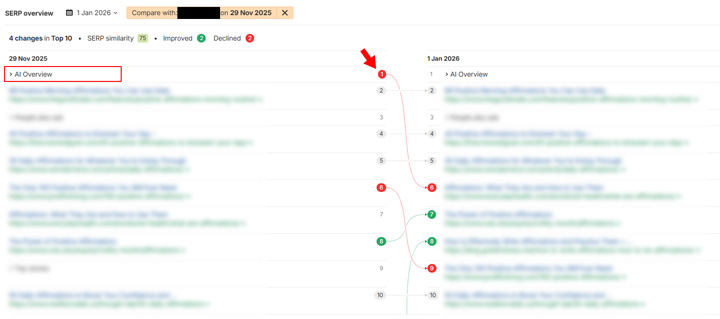
In addition, it was interesting to see sites that were ranking in AIOs drop from the AIOs either completely out of the SERPs or still ranking in the top 10 but in the 10-blue links only. Since GSC doesn’t break out rankings by AIOs (or AI Mode), it’s tough to see the impressions and clicks drop there… but I would follow my tutorial for trying to figure out the impact.
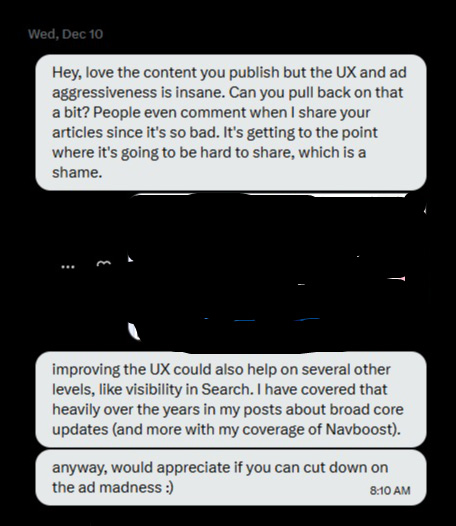
And here is their trending with the December 2025 core update. They tanked and I believe their horrible user experience had something to do with that. Remember, Navboost is tracking a ton of user interaction signals over time:
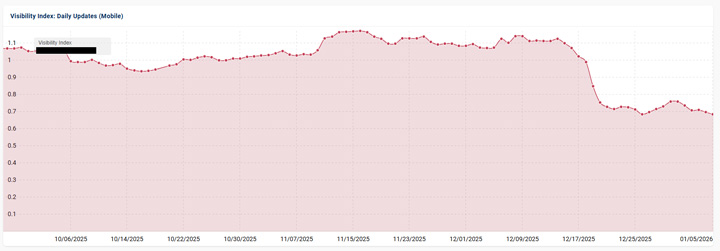
The second example is a site I know very well. I helped the site recover from several past algorithm update drops dating back to medieval Panda. I have gotten to know the site owner very well. In the fall I ended up quickly checking the site’s visibility trending based on the smaller core updates rolling out and I noticed they implemented a major user experience barrier. It was a horrible ad unit displayed via a popup that users cannot close until it the video ends. The ad unit forces users to view the ad before seeing any content on the site and without the ability to do anything on the site until the ad ends.
I can’t even imagine the horrible user interaction signals the site was sending Google based on that ad unit… Again, there’s never one smoking gun, but that’s a Howitzer in my opinion…
Here is what happened to the site. It’s one of the biggest drops I have seen with the December broad core update.
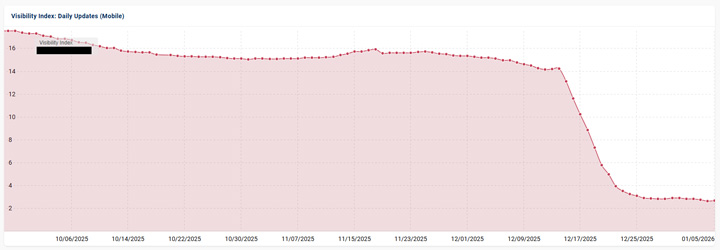
So I’ll say it once again… “Hell hath no fury like a user scorned.” Beware.
Some Forums Impacted Heavily: SERP Features Play A Roll.
When checking many forums, you could clearly see some massive volatility. Some highly visible forums across verticals were dropping heavily. And in particular, health and medical forums saw a ton of movement. For example, see the drops below for some forums.
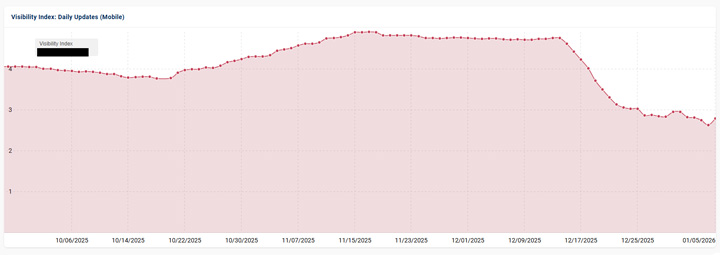
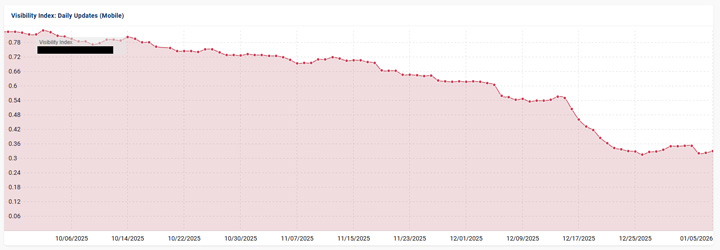
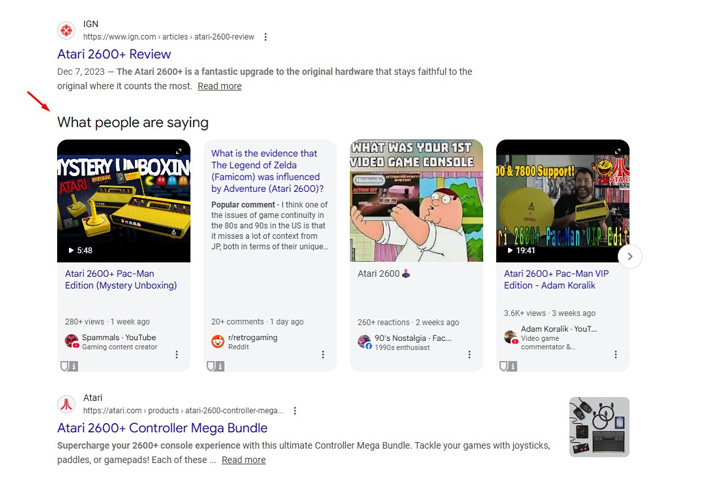
When digging into the drops, I also noticed the ‘Discussions and forums feature’ dropped out for a number of queries. It wasn’t gone for all queries obviously but I did see a number of examples where it wasn’t present anymore. In addition, I noticed the ‘What people are saying’ SERP feature was more visible. So if you run a forum and noticed a drop, I would definitely run a delta report and identify the top queries that dropped. Then I would check the queries that dropped the most, and then the SERPs, to see if search features played a roll in that drop.
Here is my tweet about forums along with what the “What people are saying” SERP feature looks like in case you aren’t familiar:
Google Spam Updates: Yes, you can recover from a spam update drop.
In my “Core Update Notes”, I explained how I ran the numbers for many sites previously impacted by Google spam updates (algorithm updates targeting Google’s spam policies for content). Many people have asked me over time if sites can actually recover from those spam updates and the answer is YES. Google has explained that if you address the spam on your site and let Google see that over an extended period of time (typically at least a few months), then the site can recover. I have also covered that over time on social media and in posts and presentations about major algorithm updates.
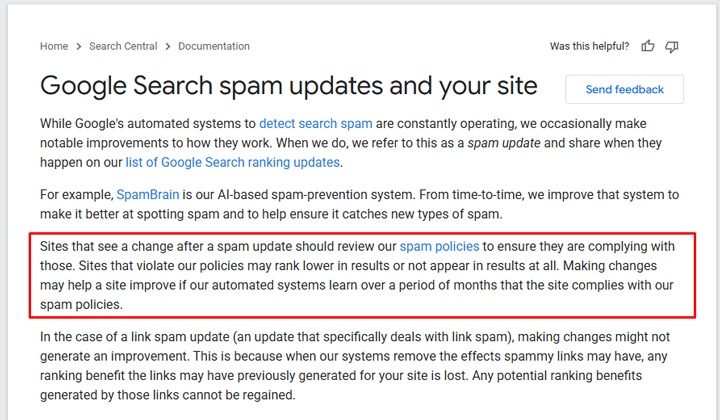
Well, with the December 2025 core update, there were a number of sites surging back that had previously been impacted by spam updates. I shared some screenshots on X showing the surges. So yes, you can recover from spam updates. It just takes work to address the spam and then you need Google’s systems to see the new situation for months…
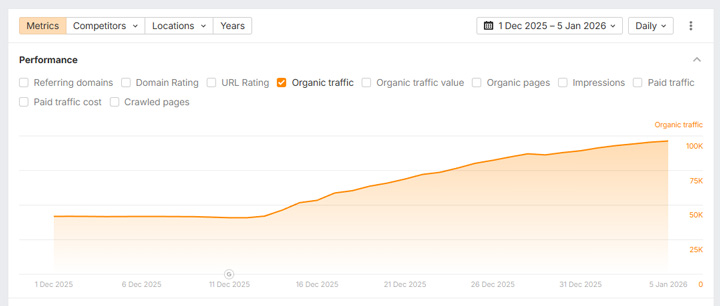
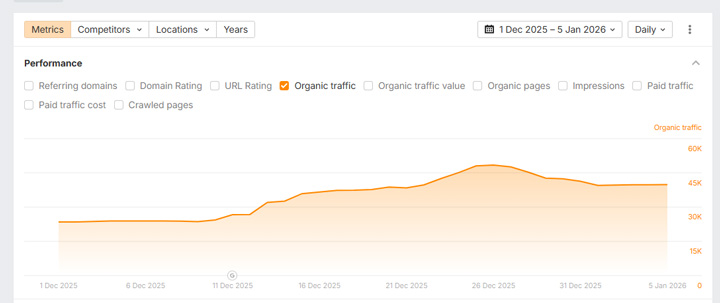
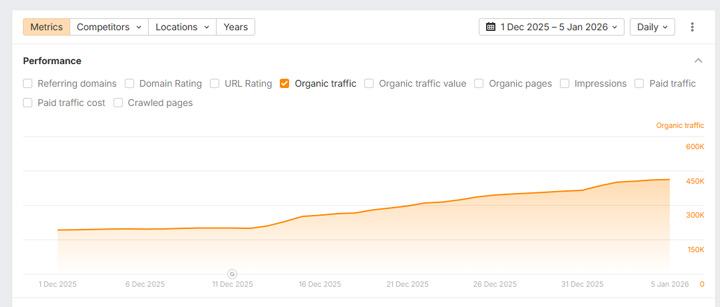
Here is my tweet about that as part of my “Core Update Notes”:
Large publishers owning a network of sites: Heavy impact.
As I was analyzing the December core update, I noticed something interesting. There are some large publishers that own a network of sites and I saw a lot of impact across the network. For some, a number of their top properties were heavily impacted. In my “Core Update Notes”, I explained that sites within a network of properties often share several characteristics and tactics, including sharing a similar technical setup, they often have the same type of advertising setup, affiliate situation, and more. Each site is evaluated on its own by Google’s core ranking system but quality problems could be similar across the network.
Anyway, I saw big problems across several publishers that own a network of sites. And these were some of the biggest sites in their niche. Again, just an interesting observation.
Wirecutter Drops (Again):
In August I covered how Wirecutter started dropping heavily in 2025… That struck me as odd considering Wirecutter has some of the most in-depth, insightful, and thorough reviews content on the web. I often refer to Wirecutter as a great example of how to handle product reviews.
Anyway, after digging into the situation in August, I noticed they were suddenly blocking crawling of the original Wirecutter site via robots.txt (at Wirecutter.com). That’s when they started tanking. After covering that at the time, Wirecutter removed the block on the old domain and started recovering. That was good to see, but it didn’t last. When the December 2025 broad core update rolled out, Wirecutter started dropping heavily again.
It’s another example of a broad core update counterbalancing what was happening leading up to the broad core update… You can see the trending below for Wirecutter (which resides in a directory of the The New York Times website – a very powerful site overall).
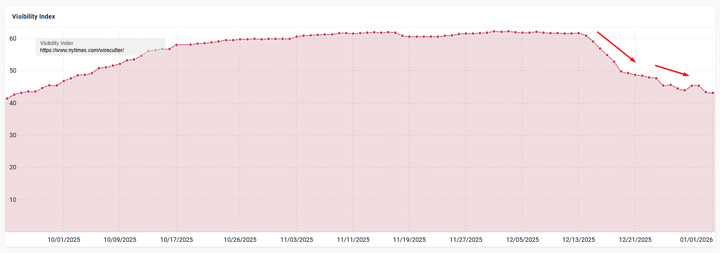
Again, it’s an interesting situation given the power of Wirecutter historically, and the power of the New York Times (nytimes.com). I would have to dig in much more to see what’s going on there, but it’s definitely worth noting.
Reddit AI-Translations: Still Surging.
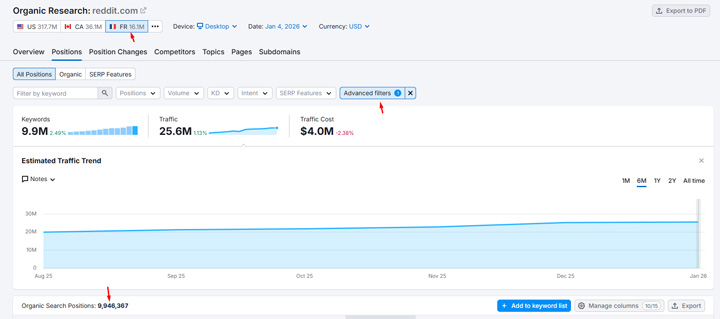
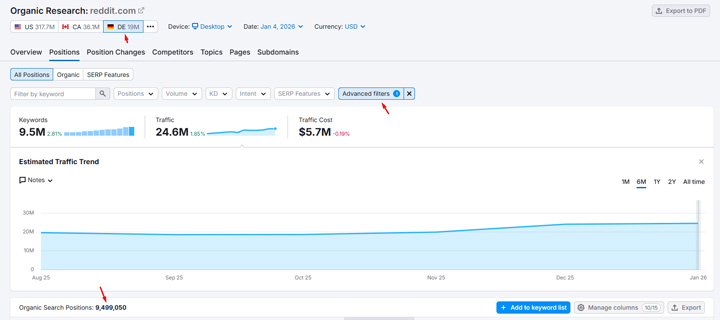
Earlier this year, I wrote about Reddit’s massive AI-generated translations initiative. Reddit has been translating its content more and more via AI into a number of languages and that content has been surging in rankings and visibility. You can read my two-part series about that situation, but here’s the quick rundown.
Google is ok with auto-translating content via AI *if* the original content you are translating is high quality. That’s dangerous obviously since “quality” is in the eye of the beholder. In the past I’ve seen sites get hit by manual actions or spam updates that scaled via automated translations… so site owners need to be careful.
With the December broad core update, I wanted to check how those AI translations were doing on Reddit visibility-wise. Well, it seems Google is still ok with Reddit scaling via AI-translated content since that content has continued to surge in search visibility across countries. You can see some examples below of the translated content surging in France and Germany. And there are a number of other countries as well… Anyway, I just wanted to check in to see how this was doing, and it’s doing well.
There’s more to cover about this update but I unfortunately needed to cut out some of my findings based on the length of this post. I might cover more of that in another post or via a video on my YouTube channel so keep an eye out for that.
Before I end this post, I wanted to provide some tips and recommendations for site owners that were impacted by the December broad core update. You can also read my primer about broad core updates which provides important points and FAQs that site owners should understand before tackling their own situation.
Recommendations and tips for site owners:
- Run delta reports – Like I have covered many times before, if you have been impacted by a broad core update, run a delta report (or several) to determine the top queries and landing pages that dropped due to the update. This should be based on GSC data, but you can also export data from the various visibility tracking tools like Semrush, ahrefs, and Sistrix. The data can sometimes shine a light on problematic areas since those were the most visible pieces of content that dropped. You can read my post about “Low quality and highly visible” and why that’s important.
- Identify reasons for the drop – Next, definitely check the SERPs for queries that dropped to determine the reason for the drop. You can read that post to learn more about the possible reasons for a drop with a broad core update. For example, find out if there was a relevancy adjustment, intent shift, or if it was “quality” causing the drop. A relevancy adjustment just means that content wasn’t as relevant anymore (so it doesn’t necessarily mean there’s a big quality problem). An intent shift is Google ranking other types of sites for the query, which also isn’t something a site owner can address. But if the issue was “quality”, then that can be addressed by site owners.
- Check for SERP feature impact – Beyond the three reasons I listed above, check for SERP feature impact. Like I covered earlier for forums, changes in major SERP features for queries can have a big impact on visibility and click-through rate. E.g. Did Google add a new SERP feature, remove one, etc.?
- “Quality indexing” is important – Focus on ‘Quality indexing’, which is making sure your highest-quality content is indexable while making sure lower-quality content or thin content is not indexable. Google takes every page indexed into account when evaluating quality, so that ratio matters.
- Do not forget about Navboost – Understand that Navboost is an important system for Google and that quality is not just about content. Google has explained that before and I have covered it many times in posts and presentations about broad core updates. “Quality” includes content, the user experience, the advertising situation, affiliate situation, technical SEO problems causing quality problems, and more. Don’t miss the forest for the trees by ignoring how users experience your site. As I explained before, Navboost is an amazing way for Google to understand happy versus unhappy users. Don’t be on the wrong side of Navboost.
- Focus on your own site first – When site owners reach out to me after dropping due to a major algorithm update, some start explaining how bad their competitors are. I totally understand that, but it’s important to control what you can control. I always recommend focusing on your own site first, addressing all potential quality problems, fixing user experience issues, aggressive advertising, and more before complaining about the competition. Start where you can actually make a difference and that’s with your own website.
- Watch the use of fully AI-generated content – I have covered the danger of publishing 100% AI-generated content many times on social media, in previous posts, etc. Google has explained that it’s more about quality and not necessarily that it’s produced via AI, but simply publishing AI content without human intervention is extremely risky in my opinion. That’s why humans should be involved in the process (editing, reviewing, fact checking, and more). If not, you can tip the scales in the wrong direction quality-wise as you publish more and more AI-generated content. And if that happens, you leave your site susceptible to a broad core update drop or even a manual action for scaled content abuse. Both situations are not pleasant and can take a long time to recover from. Beware.
Summary: The December 2025 Broad Core Update Was Huge.
The industry was waiting a long time for the next broad core update, and Google did not disappoint. The December broad core update caused a ton of volatility across sites, verticals, and countries. And it was preceded by several strong “smaller core updates” in the fall that caused a lot of movement for some sites.
Now that the update has completed, it’s time to assess the impact, form a plan of attack for addressing drops, and then execute your remediation plan with efficiency. I believe we’ll see another broad core update in early spring… maybe around March. And Google will need to see significant improvement in quality over the long term for sites to recover. But remember, there are always “smaller core updates” that can help along the way. Good luck.
GG
Back to top>>