
I’ve worked on many international SEO projects over the years, including structuring that content in various ways. For example, sites providing content in different languages on the same domain, content in different languages across separate domains, content in the same language targeting different countries, and more. And now that AI Search is growing, I’m helping clients understand how platforms like ChatGPT, Perplexity, Claude, Copilot, and Gemini are handling content published in different languages (including content using hreflang tags). And then there’s Google’s AI Overviews and AI Mode, which provide AI responses directly in the search results. I’ll cover more about that as well.
Below, I’ll cover several tests I performed across Google, Bing, AI Overviews, AI Mode, and then AI Search platforms to see which urls were returned by each. The results might surprise you, or not… And if you provide content in several languages, target an international audience, etc., then this post is right up your alley. I’ll also provide key takeaways at the end of the post for site owners publishing multilingual content.
Also, I do believe the AI Search platforms will improve (they have to), but you definitely want to understand the current state which could be impacting visibility and downstream traffic from the various AI Search platforms now. Again, I’ll cover more about this later in the post.
Let’s get started.
Disclaimer: Before I begin with the examples, I want to acknowledge that testing for different languages across AI Search platforms is not a perfect science. I tried my best to test several times and several ways to check the results were across platforms. I also leveraged some AI Search visibility tools to check responses across languages and countries to supplement my own testing. AI Search is also extremely dynamic so you might see different results than I did during my testing. And finally, my testing was more about language than country. My goal was to see what the AI Search platforms returned when searching in different languages when content had been translated into those additional languages.
Example 1: Google’s Search documentation. A great place to start.
Google’s Search documentation is provided in a number of languages and uses hreflang tags to signal which content should be returned in the search results by language and country. For example, if you check the documentation’s source code, you will see a number of hreflang tags.
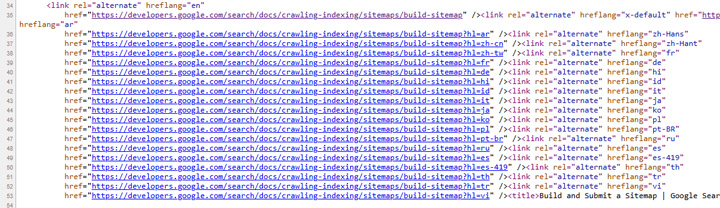
So I started testing queries in other languages to see what Google, Bing, and AI Search platforms would return. Note, for Google I placed myself in other countries and searched in the language I was testing. For AI Search, I was able to change my preferred language in each platform within my settings. My goal was more about testing different languages than countries, so changing my preferred language while searching in that language was the best route for me. I’ll cover my findings below.
URL (the US English version is below but that content has been translated into other languages):
https://developers.google.com/search/docs/crawling-indexing/sitemaps/build-sitemap
Query: Comment créer un sitemap XML
Google 10-blue links:
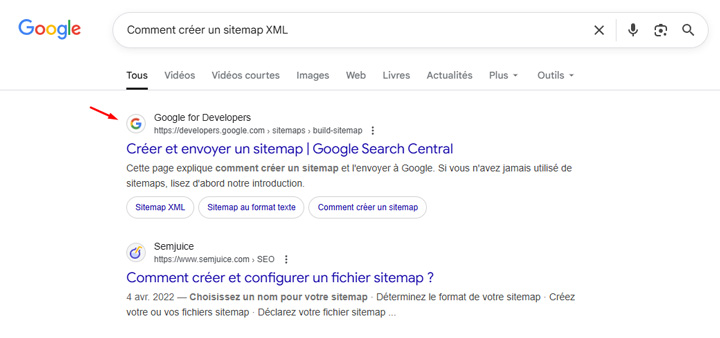
The correct url was returned (French version). This was not shocking since Google is often very good at returning the correct language urls, especially when hreflang is used.
AI Overview (France):
No AIO showed up when placing myself in France.
AI Overview (US):
The US English url ranked even though I was searching in French. Note, AIOS were typically correct during my testing so this was an anomaly.
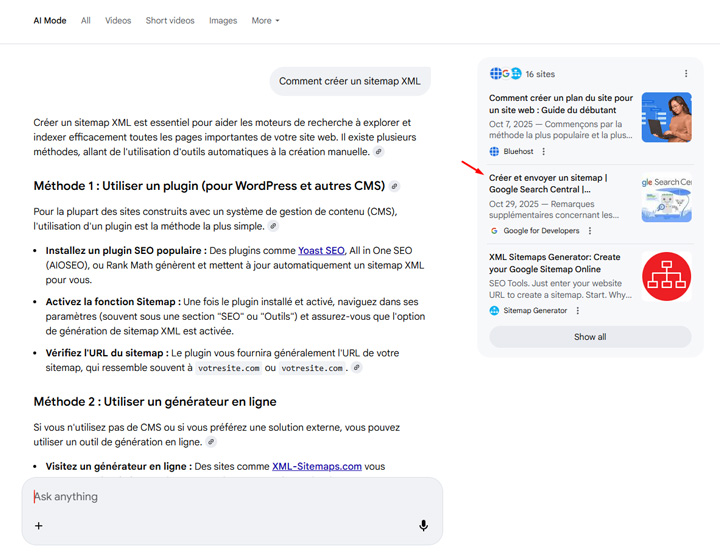
AI Mode:
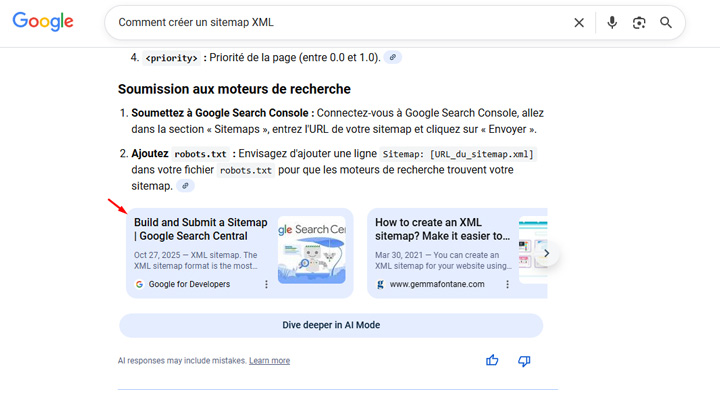
The correct url ranked in AI Mode (the French url) with scroll-to-text highlighting.
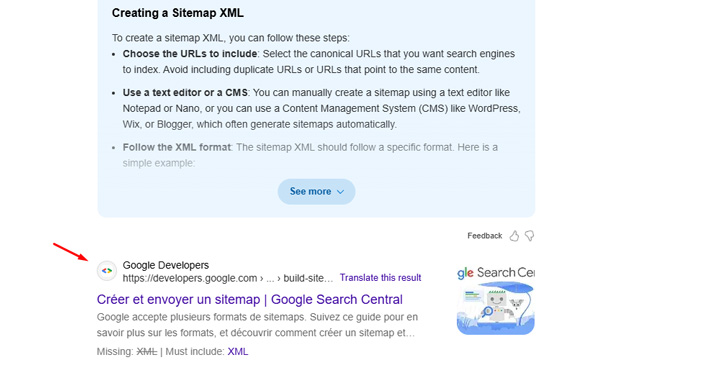
Bing:
The correct url was returned, which was the case for each of the tests I ran across sites. That makes complete sense since Bing is very good at returning the correct language urls and it does support hreflang (although it’s a weaker signal for them). Both Google and Bing have improved their systems over decades to handle multilingual content correctly.
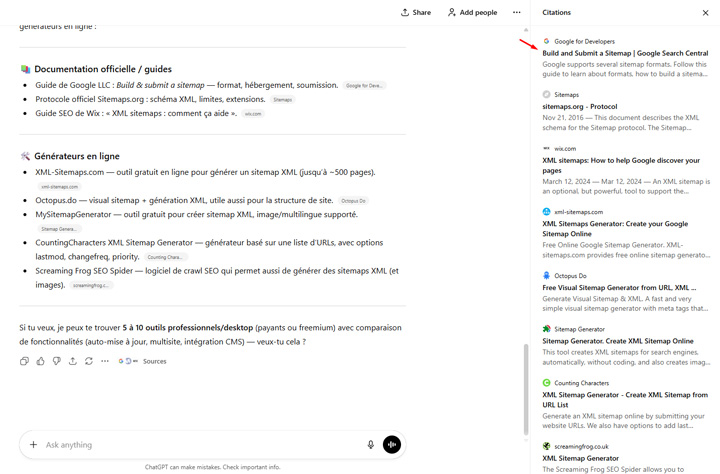
ChatGPT (with French as my preferred language in the settings):
The first answer didn’t provide any sources or links, so I made sure to trigger web search and tried again. ChatGPT returned a link but it was the US English version. The response was in French, and the videos returned were in French, but the links were US English. This was a common theme with ChatGPT by the way. More on that soon.
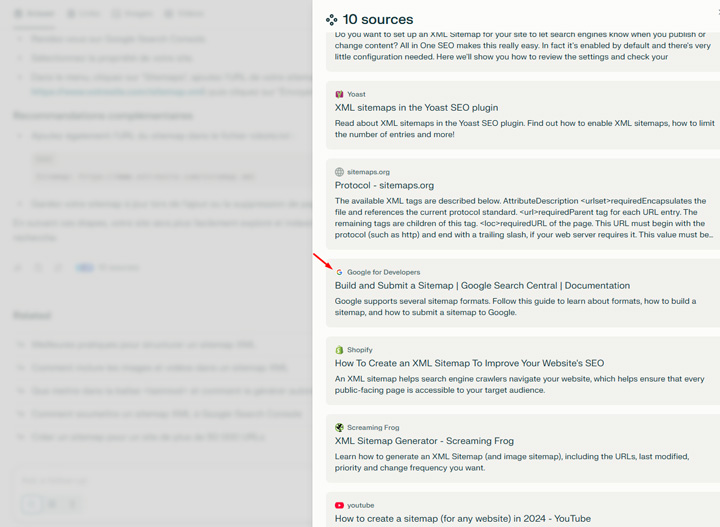
Perplexity (also with French as my preferred language):
Returned the US English version. Like ChatGPT, the response was in French, and the videos returned were in French, but the link for Google’s documentation was the US English version.
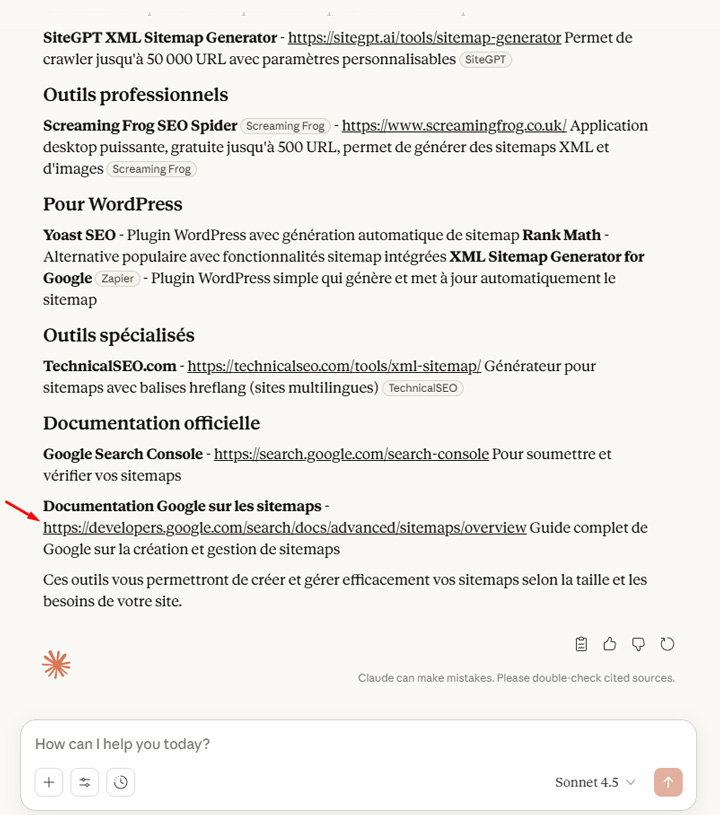
Claude (also with French as my preferred language):
Web search was not triggered initially. I asked for references but links were still not returned by Claude. Then I specifically asked for links and it did return sources, but the wrong version was returned (the US English version).
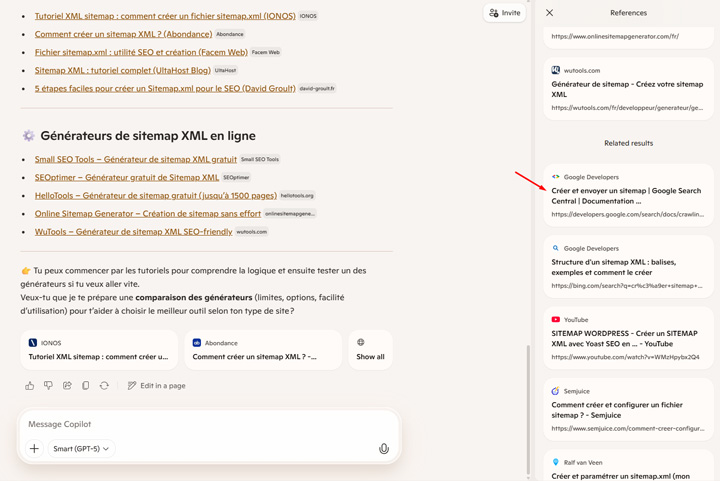
Copilot (with French as my preferred language):
Like I thought would happen, Copilot returned the correct url (the French version). That’s because Copilot leverages Bing’s systems and Bing is very good at understanding the right language to return (and hreflang is a signal it uses, albeit a weaker signal for them).
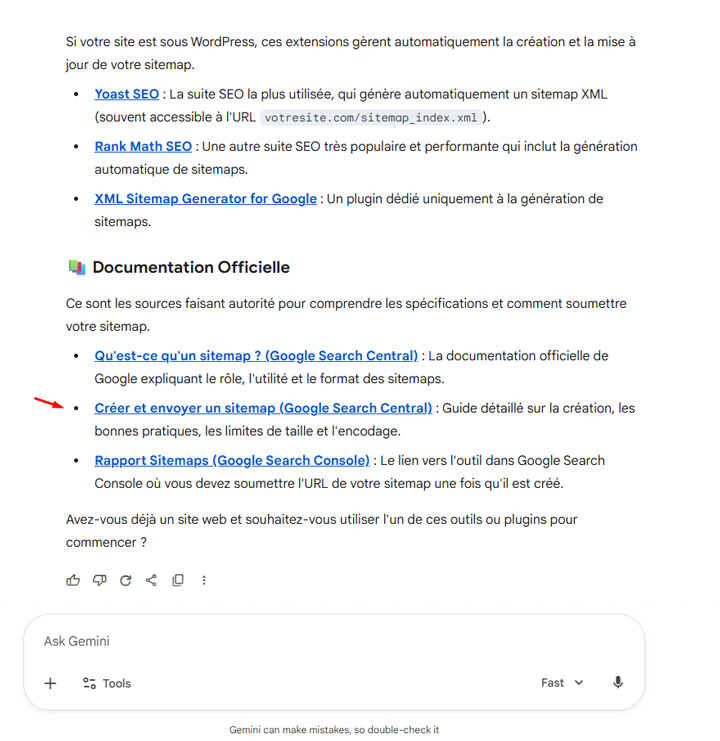
Gemini (changing my browser language to French):
No sources were provided initially (a common theme for Gemini). I specifically asked for sources and links and Gemini successfully provided the right documentation (the French urls).
Net-net:
- 10-blue links returned the correct url (French).
- No AIO showed up when searching from France.
- The AIO returned the US English version when searching in French. (Again, this was an anomaly since AIOs were often returning the correct language for me).
- AI Mode returned the correct url (French).
- AI Search platforms were all wrong other than Copilot which leverages Bing’s systems (and Bing is very good at understanding multilingual searches and returning the correct language urls).
- Gemini did not initially return any sources. Again, a common theme when testing Gemini… But once asked for links, it did return the correct version of the content.
Example 2: Yet another example from Google’s Search documentation:
URL (Again, the US English version is below, but the content has been translated into several languages):
https://developers.google.com/search/docs/crawling-indexing/http-network-errors?hl=it
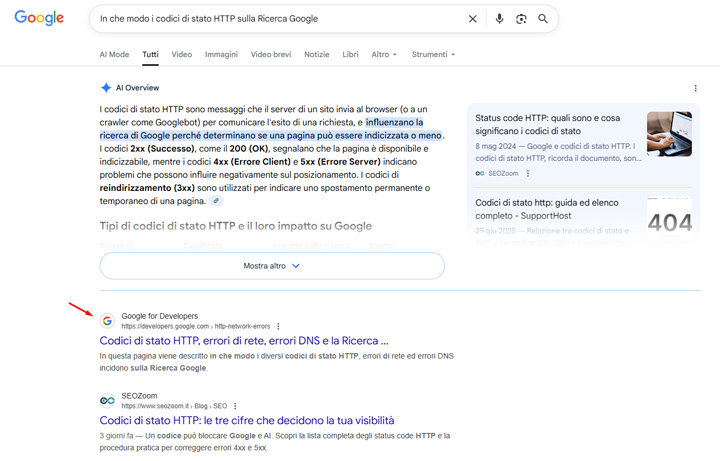
Query: In che modo i codici di stato HTTP sulla Ricerca Google
Google 10-blue links:
The correct url ranked (Italian).
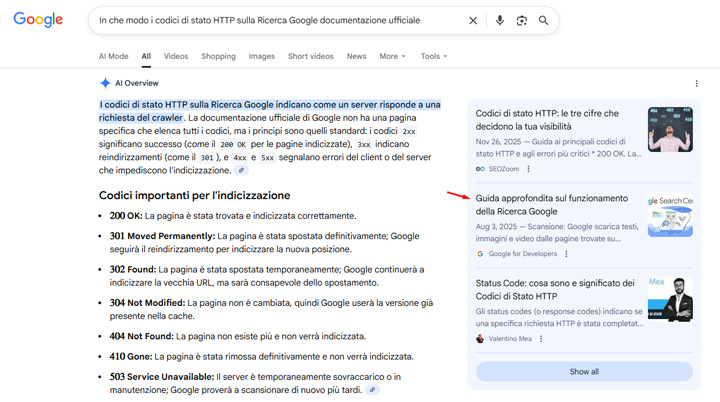
AI Overview:
The correct url ranked (Italian).
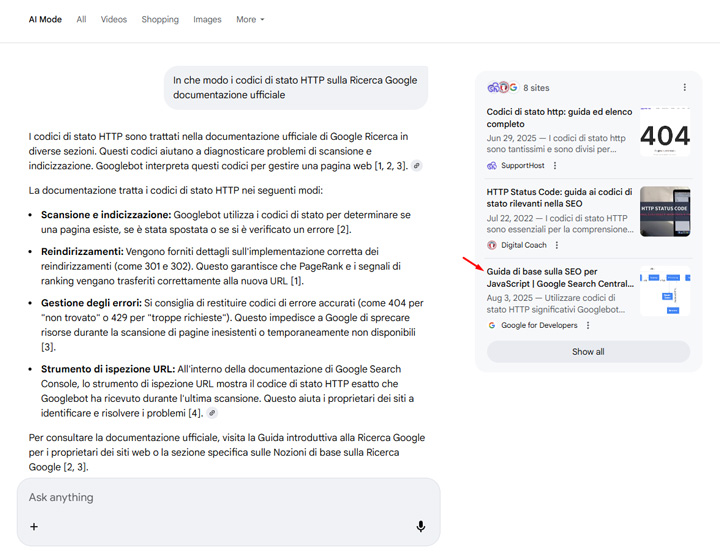
AI Mode:
The correct version ranked.
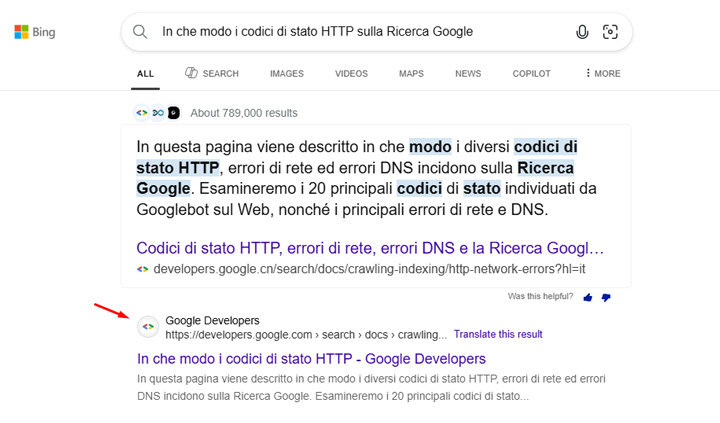
Bing:
The correct url was returned, which was the case for each of the tests I ran across sites.
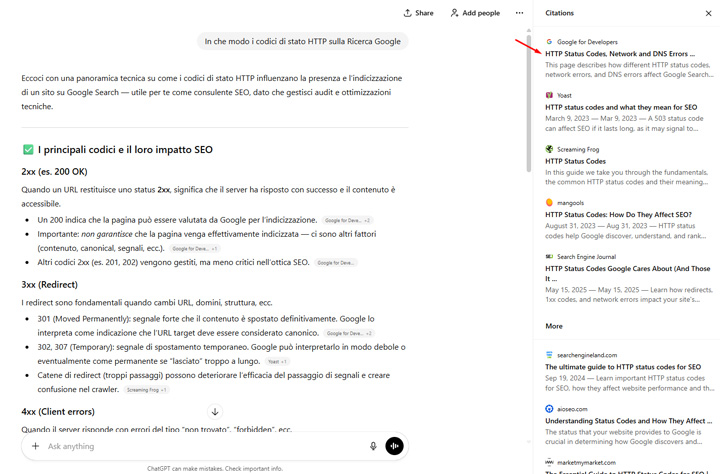
ChatGPT (with Italian as my preferred language in the settings):
No sources were provided with the initial answer. I asked for links and the US English version was returned.
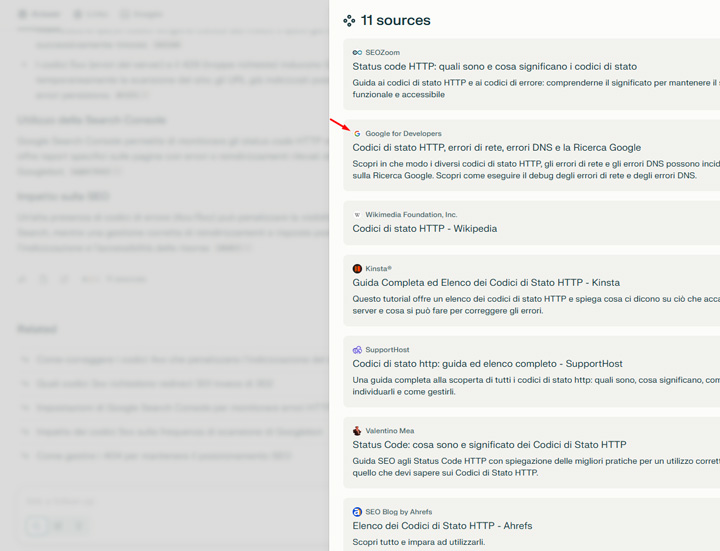
Perplexity (also with Italian as my preferred language):
The correct url was returned (Italian). This was rare during my testing. Perplexity often returned the wrong url…
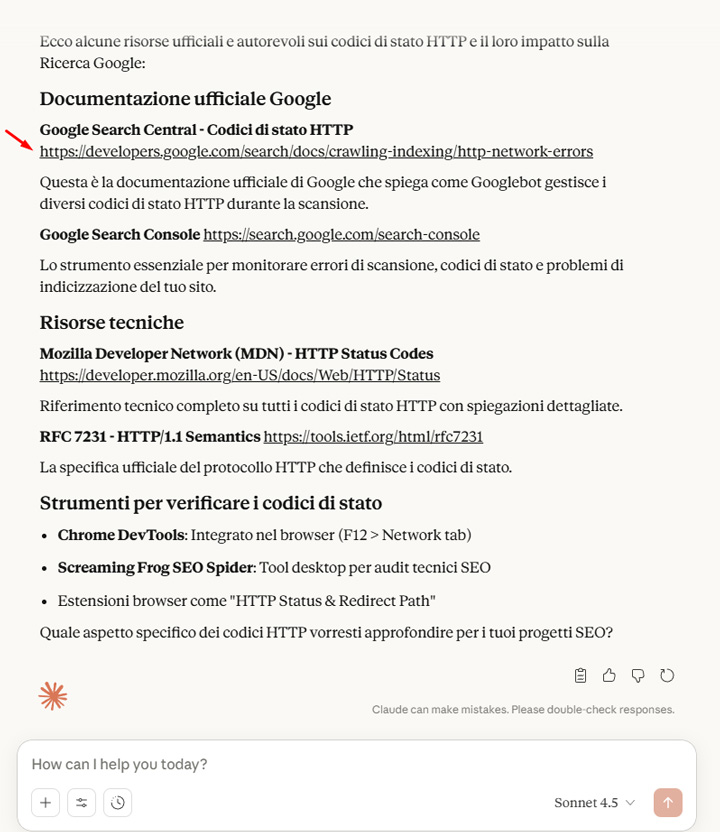
Claude (with Italian as my preferred language):
No sources were returned with the initial answer (common for Claude…) After asking for sources, the US English version was returned.
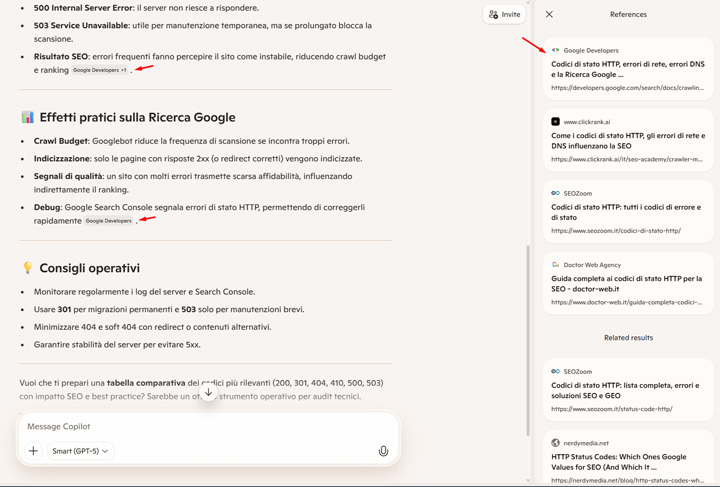
Copilot (with Italian as my preferred language):
As expected, the correct url was returned (Italian). Again, Copilot leverages Bing’s systems and Bing is very good at detecting the language and returning the correct urls. And like I covered earlier, Bing also supports hreflang although it’s a weaker signal for them.
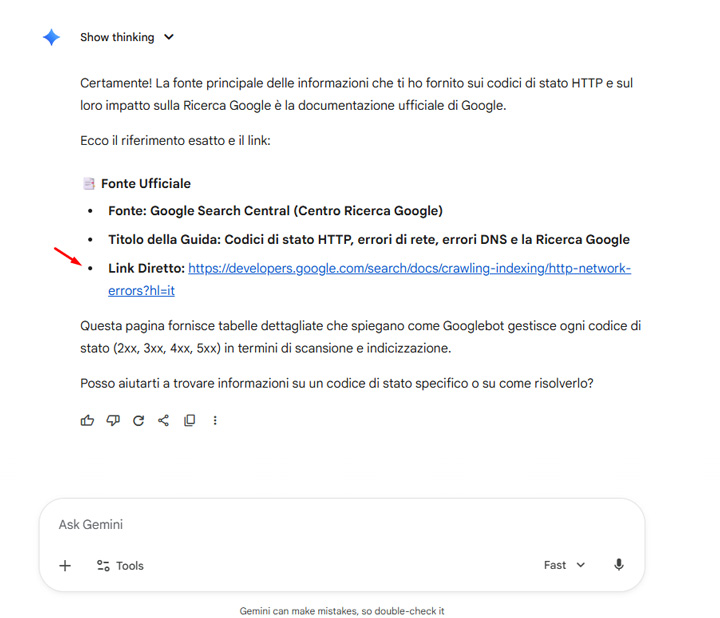
Gemini (changing my browser language to Italian):
No links were returned initially. Again, this was par for the course with Gemini unfortunately. After asking for links, Gemini did return the correct url (the Italian version).
Net-net:
- 10-blue links returned the correct url.
- The AIO returned the right url as well.
- AI Mode returned the right url too.
- ChatGPT returned the wrong url (US English).
- Perplexity: when changing my preferred language to Italian, the right url showed up. Again, this was rare as Perplexity returned the wrong urls for most of my testing.
- Claude: the wrong url showed up.
- Copilot: the correct url showed up, which I expected. Again, Copilot leverages Bing.
- Gemini didn’t return any sources initially, which was a common theme for Gemini… When asked for sources, the right url was returned.
Example 3: Cloudflare blog posts.
Now let’s take a look at a Cloudflare blog post, since the blog content is translated into different languages. In addition, hreflang tags are used to signal the different versions of the content.
URL (US English version is below, but the content has been translated into several languages):
https://blog.cloudflare.com/18-november-2025-outage
Query:
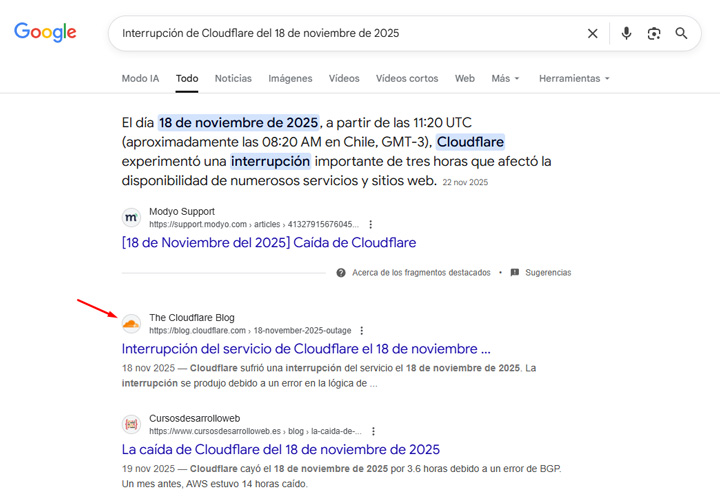
Interrupción de Cloudflare del 18 de noviembre de 2025
Google 10-blue links:
Correct version ranks (Spanish).
AI Overview:
No AIO present when placing myself in Spain or from searching in the US.
AI Mode:
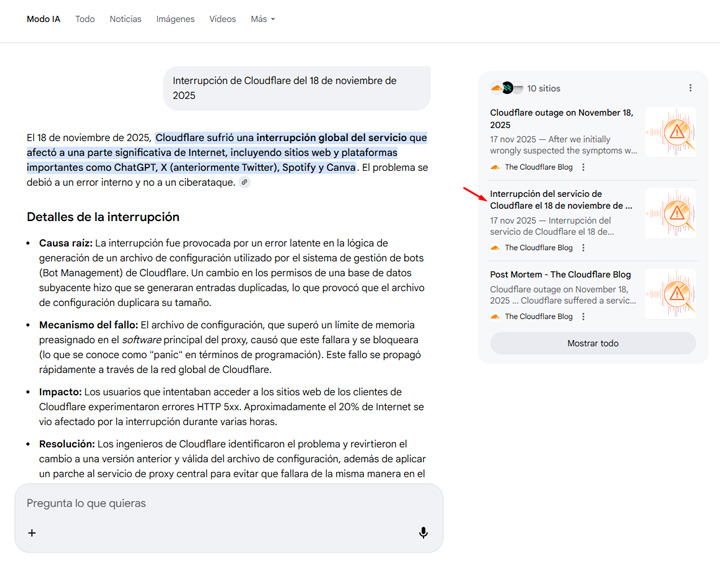
Multiple versions of the content ranked (the US English version and the Spanish version).
Bing:
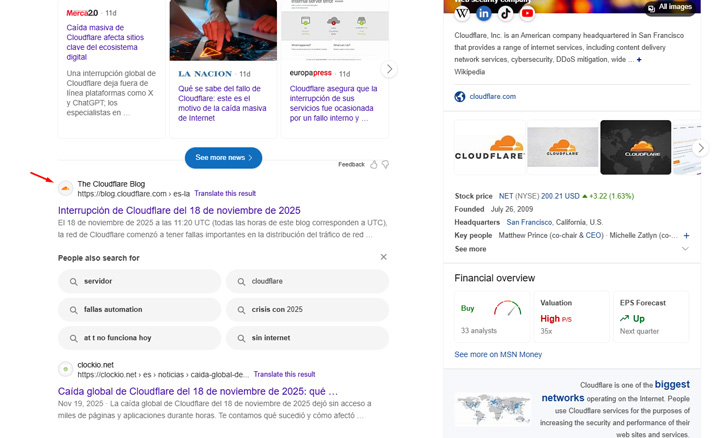
Correct version ranked. Again, not shocking since Bing is very good at returning the correct language urls (and does support hreflang)…
ChatGPT (setting Spanish as the preferred language):
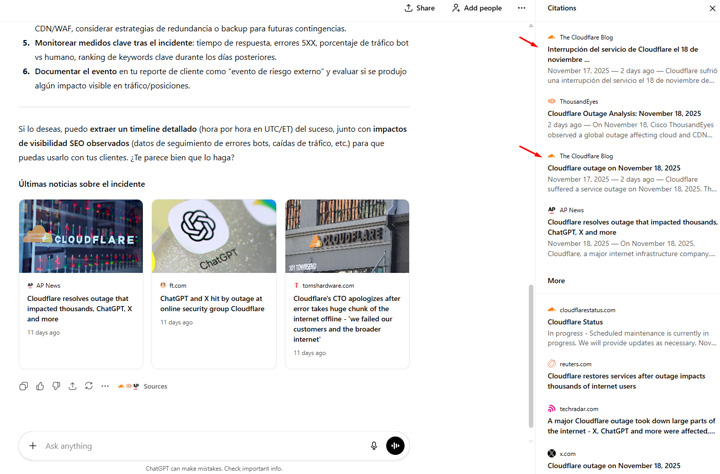
The correct version ranked, but both the Spanish version and US English version ranked in the answer.
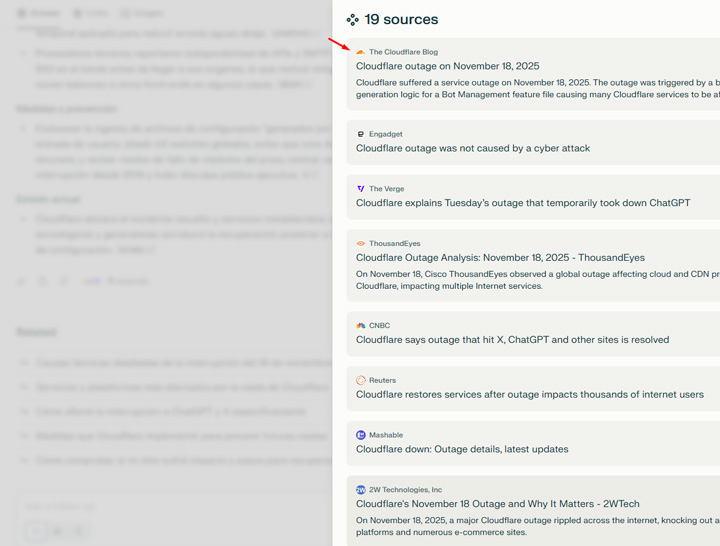
Perplexity (setting Spanish as the preferred language):
The US English version ranked. So once again, Perplexity having issues surfacing the correct urls.
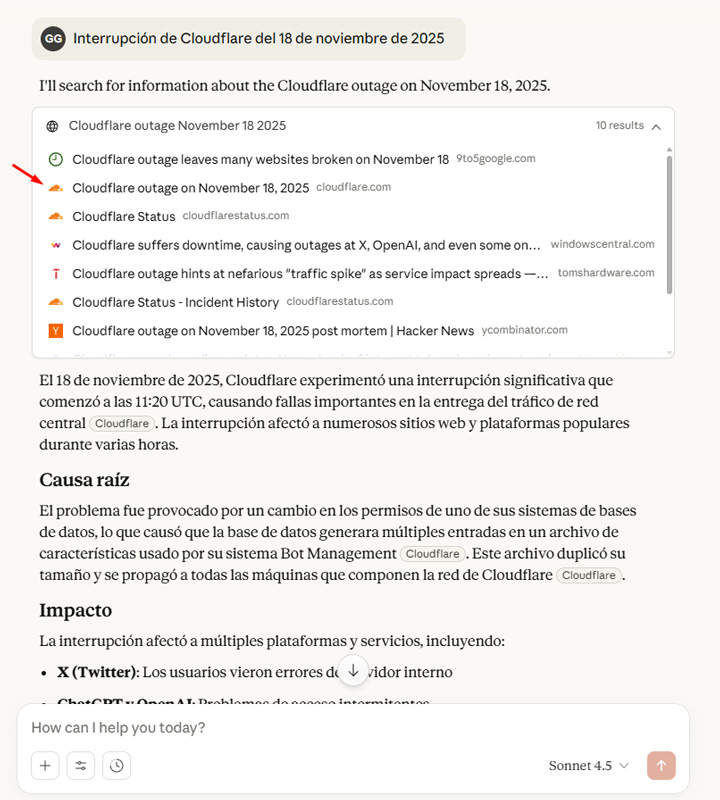
Claude:
US English version ranked.
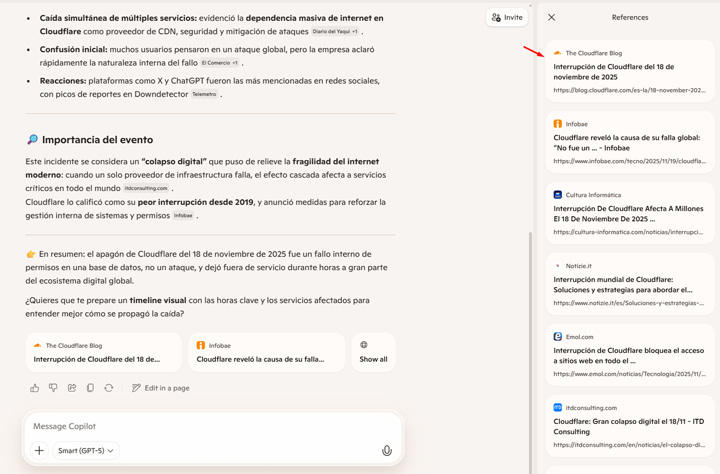
Copilot:
Correct version ranked (which again, isn’t shocking).
Gemini:
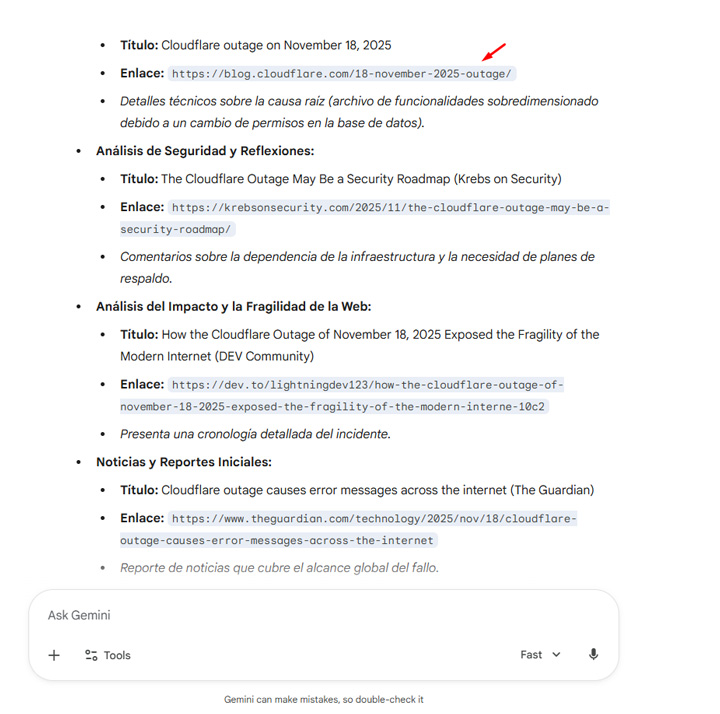
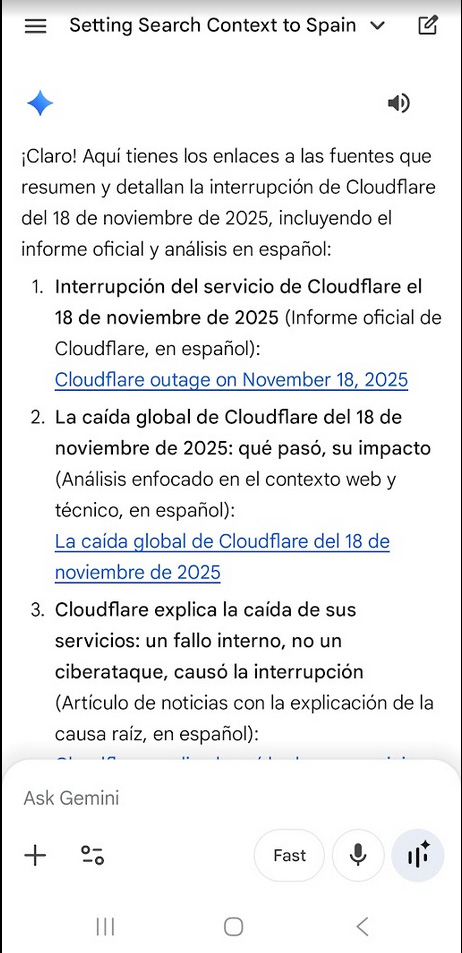
No sources were returned with the initial answer. Again, this was a common theme for Gemini. I then asked for sources and the US English version ranked (but the links weren’t active. Just the unlinked url was provided). But when using the Gemini app and placing myself in Spain, the correct version was returned (Spanish version). So Gemini was inconsistent when searching in Spanish (for this example anyway).
First, here is the unlinked version that was returned (US English):
And here is the correct version of the url ranking in the Gemini app after placing myself in Spain:
Quick recap of other tests:
I also tested other sites that have translated content and were using hreflang. For example, sites focused on finance, media, press releases, obituaries, and more. I saw very similar results during my testing. That’s a good segue into key points and recommendations for site owners.
Results, tips, and next steps for site owners:
- The AI Search platforms need to improve when content is provided in several languages. While Google and Bing did a great job surfacing the correct versions of the content, AI Search platforms like ChatGPT, Perplexity, and Claude did not do a great job.
- And as an extension of Google and Bing, Copilot and Gemini are the only ones doing a solid job surfacing the right language urls when searching in different languages (at least based on my testing).
- AI Overviews and AI Mode leverage Google’s systems but I saw more consistency with AI Mode than AIOs. Both did a pretty good job of returning the correct urls, but not every time.
- Using hreflang can help with Google and Bing, and then downstream features like AI Overviews and AI Mode. And Gemini and Copilot both leverage Google and Bing respectively, so hreflang should be helping there. But we have no idea if the other AI Search platforms support hreflang at all. My guess is they don’t based on how badly they performed when searching in different languages.
- For site owners with translated content, now is a good time to double check your hreflang setup. Run some large-scale crawls of the site with a focus on hreflang. Then dig in to ensure everything is correct.
- Gemini didn’t provide sources and links as much as the other platforms. That was frustrating and forced me to ask specifically for links and sources. I doubt many people would do that. It’s just a side note… but an important one from a downstream traffic standpoint.
Summary: Multilingual content in AI Search still has a long way to go.
AI Search is just in its infancy but it’s important to make sure the right content is returned to users when they are searching across languages. My testing revealed that AI Search platforms like ChatGPT, Perplexity, and Claude still have a long way to go on that front. Google and Bing were very good at returning the right content, which makes sense since they have decades experience dealing with multilingual content and both support hreflang. And AI Overviews, AI Mode, Gemini, and Copilot all performed much better than other AI Search platforms, which again makes sense since they leverage Google and Bing.
If you provide content across languages, then I recommend going through a similar testing process. I would see what the AI Search platforms are returning so you can understand what users are experiencing while using those tools. And again, I do expect the AI Search platforms to improve (they have to), but it’s smart to fully understand the current state of affairs from an international visibility perspective.
GG